


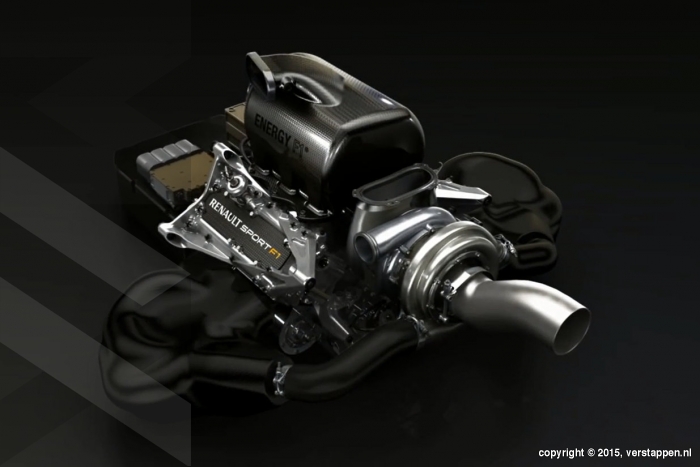
You follow engines that doubled as symphonies and engineering statements, from the visceral V8 roar to the compact efficiency of today’s hybrid turbos. You’ll learn how F1 moved from high-revving, naturally aspirated V8s prized for raw sound and simplicity to complex hybrid turbo power units that blend electrification, energy recovery, and thermal efficiency without sacrificing speed.
This article will guide you through the golden V8 era, the regulatory and technological shifts that forced a redesign of priorities, and the key breakthroughs that turned F1 into a laboratory for luxury automotive innovation. Expect clear comparisons of V8 and hybrid turbo architectures, the engineering trade-offs behind performance and sustainability, and what those changes mean for the future of high-performance engines.
The Golden Era of V8 F1 Engines
You experienced engines that balanced high-revving sound with reliable race performance. The following parts explain how V8s delivered power, memorable races, the teams and drivers who defined the era, and the technical legacies that followed.
Key Performance Features
The V8s in F1 were 3.0-liter naturally aspirated engines with direct fuel injection and peak power typically between 400–530 bhp in race trim. You’d notice redlines often above 18,000 rpm, which produced the distinctive, sharp note fans associate with this era.
Regulations enforced weight and intake limits that shaped packaging and power delivery. Teams optimized valve timing, intake trumpets, and lightweight internal components to maximize rev range while preserving durability across race weekends.
Fuel flow and efficiency weren’t as tightly constrained as in later hybrid eras, so teams focused on mechanical grip and engine mapping to extract lap-time gains. The result: engines that were high-revving, relatively simple mechanically compared with hybrids, and responsive across the rev band.
Iconic V8 Racing Moments
You saw multiple headline-grabbing finales and on-track battles that defined the V8 years. Sebastian Vettel clinched the final V8-era championship in 2013, a clear marker for the end of that specific engine formula.
Several races stood out for engine-led performances: qualifying laps where teams pushed engines to their rev limits, and long stints showing reliability under race stress. You also remember spectacular overtakes enabled by the V8s’ linear throttle response and high rpm ceiling.
These moments reinforced the era’s identity: loud, aggressive engine notes combined with close, mechanical grip-driven racing that rewarded driver precision and engine durability.
Notable Teams and Drivers
You associate front-running teams like Red Bull, Ferrari, and McLaren with the V8 era’s peak competitiveness. Red Bull, in particular, used chassis aerodynamics and tuned V8 power delivery to dominate several seasons.
Drivers who excelled with V8 machinery—such as Sebastian Vettel, Fernando Alonso, and Lewis Hamilton—leveraged the engines’ high-rev capability and predictable torque curve to extract lap time. You’d notice teams pairing engine maps with aerodynamic setups to suit each circuit’s demands.
Midfield outfits optimized packaging and cooling to stay competitive, while customer engine programs allowed smaller teams to access proven V8 designs. The result was a broad grid competitiveness that highlighted driver skill and vehicle balance.
Impact on F1 Technology
You can trace several technical legacies from the V8 era into later power unit development. Lightweight materials, precision machining, and high-rev endurance testing remained core practices when F1 shifted to hybrid V6 turbos.
Engine control unit (ECU) strategies developed during V8 times informed later energy recovery and hybrid deployment logic. Thermal management and packaging solutions also carried over, influencing how teams integrate turbochargers and electric components.
Finally, the V8 era reinforced the trade-offs between sound, simplicity, and efficiency—lessons that shaped debates about engine character versus sustainability during the transition to hybrid turbo power units.
Transition to Hybrid Turbo Power Units
The change moved F1 from high-revving, naturally aspirated V8s to compact, turbocharged V6s paired with complex energy recovery systems. You’ll see why teams accepted trade-offs in sound and simplicity for big gains in fuel efficiency, thermal efficiency, and road-relevant technology.
Reasons Behind the Shift
You experienced rising pressure for relevance to road-car technology and stricter fuel consumption goals. Teams needed powertrains that delivered comparable on-track performance while using less fuel; the V6 turbo-hybrid architecture cut fuel use substantially through electrically assisted torque and better thermal efficiency.
Commercial and political forces guided the switch as well. Sponsors and manufacturers wanted F1 to showcase electrification and hybrid systems that customers could recognize. You should note cost-control and sustainability became talking points that influenced investment decisions across manufacturer teams.
Fan reaction and spectacle also mattered, but technical and commercial drivers dominated. You’ll find that compromises—lower engine noise, greater complexity—were accepted because they matched global automotive trends and regulatory priorities.
Technical Overview of Hybrid Turbos
Hybrid turbo power units combine a 1.6‑liter, direct‑injection V6 turbocharged internal combustion engine (ICE) with two energy recovery systems: MGU‑K (kinetic) and MGU‑H (heat). The MGU‑K recovers braking energy and can deploy up to 120 kW to the drivetrain. The MGU‑H captures turbine/heat energy from the turbocharger to control lag and charge the battery or feed the MGU‑K directly.
Energy storage comes from high‑power lithium‑ion batteries and power electronics that manage bi‑directional flow between ICE, turbos, and the electric motors. Turbo sizing and differential charging strategies let teams tune transient response and peak power delivery. You’ll notice packaging, cooling, and reliability became major engineering challenges due to density of components and high thermal loads.
Teams optimize power maps, energy deployment windows, and ERS harvesting to balance lap time against component life and fuel limits. The result: peak lap power often rivals old V8 outputs, while measured fuel consumption and thermal efficiency improve significantly.
Regulatory Changes Influencing Evolution
Regulations mandated the 2014 shift: rules specified a 1.6‑liter V6 single turbo architecture with strict limits on fuel flow (kg/h) and total fuel allowed per race. The rulebook also defined MGU‑K power limits and the permitted functions of the MGU‑H, shaping how teams could harvest and deploy energy.
Governance balanced performance ceilings and cost control through component homologation and limits on development cycles. You should note constraints such as fixed energy deployment rates, durability requirements, and homologation windows reduced runaway spending while incentivizing innovative efficiency gains.
Ongoing regulatory updates adjusted fuel flow maps, cost-containment measures, and rules for sustainable fuels. These changes pushed you and teams to extract more efficiency per joule of fuel while keeping competition close and preserving the technical links to road‑car hybrid technology.
Breakthroughs in Modern F1 Engine Design
You will see how recent F1 engines squeeze more power from less fuel, harvest energy during racing, and combine thermal and kinetic systems into a compact, high-reliability package. Key advances focus on fuel efficiency, peak power delivery, and integration of energy recovery hardware with turbochargers and electrics.
Advancements in Efficiency and Performance
You get higher specific power from a 1.6‑litre V6 turbo layout by optimizing combustion, boost management, and reduced internal friction. Engineers use precise direct injection timing, higher compression ratios where materials allow, and ceramic coatings on pistons and ports to raise thermal efficiency without sacrificing durability.
Teams tune turbo maps and intake/exhaust geometry to flatten torque curves across the rev range. Lightweight reciprocating components and friction-reducing coatings lower parasitic losses, helping the engine deliver comparable lap power to past larger-displacement units while consuming significantly less fuel per lap.
You also benefit from tight packaging that reduces heat soak and improves cooling efficiency. Compact, integrated ancillaries and bespoke engine maps let you extract transient power for overtakes while meeting strict fuel-flow and fuel-mass regulations.
Energy Recovery Systems (ERS)
You rely on two primary ERS components: the MGU‑K (kinetic) and MGU‑H (heat). The MGU‑K recovers braking energy and can deliver up to 120 kW (approx. 160 hp) of electric boost for short bursts, subject to FIA deployment limits and battery state-of-charge management.
The MGU‑H sits on the turbo shaft and converts exhaust heat/rotational energy to electrical energy or directly controls turbo speed to eliminate lag. It allows you to harvest high‑temperature exhaust energy continuously and either send it to the battery or feed it to the MGU‑K, improving both efficiency and transient response.
Battery chemistry, cooling, and power electronics determine how much recovered energy you can store and deploy in a lap. You must balance charge cycles, weight, and thermal limits to maximize usable energy while preserving reliability across race distances.
Role of Thermal and Kinetic Technologies
You see thermal management extend beyond cooling to active control of exhaust and turbo behavior. Turbocharger technology combines variable geometry strategies and electrically assisted spindles (via the MGU‑H) to keep boost stable across rpm, reducing lag and improving throttle response.
Kinetic systems focus on optimizing regeneration windows and minimizing energy losses through high-efficiency inverters and low-resistance wiring. Thermal insulation and advanced heat exchangers preserve recovered energy quality and protect batteries and electronics from extreme temperatures.
Integration matters: your engine control unit coordinates fuel injection, ignition, turbo control, MGU‑H/K deployment, and battery management to produce smooth, predictable power delivery. That integration yields lap-to-lap consistency, faster acceleration out of corners, and strict compliance with fuel-flow and energy usage rules.
Comparing V8 Engines and Hybrid Turbo Power Units
You’ll see clear differences in peak power delivery, driver control inputs, acoustic character, and fuel efficiency. The comparison focuses on lap-time relevant metrics, sensory experience for fans, and on-track emissions and energy use.
Performance and Speed Differences
V8s delivered higher-revving, linear powerbands with peak power concentrated at very high RPM (often above 17,000 rpm). You felt power build smoothly as revs rose, which rewarded throttle precision and momentum through corners. Those engines gave strong mechanical throttle response and simplified mapping, which made driver inputs more directly correlated to immediate acceleration.
Hybrid turbo power units combine a 1.6‑L turbocharged V6 with two energy recovery systems (MGU‑K and MGU‑H). You gain large instantaneous torque from the electric systems at corner exits and sustained mid-range torque from the turbo, which improves out-of-corner acceleration and reduces dependence on peak RPM. Power delivery is more complex: boost management, ERS deployment strategy, and turbo lag mitigation all affect lap pace. Teams optimize hybrid deployment for qualifying and race trims, so you see higher overall efficiency and comparable or better lap times despite smaller engine displacement.
Sound and Spectator Experience
V8s produced a high-frequency, naturally aspirated scream that was loud and continuous at high RPM. You could hear clear harmonic overtones and instantaneous throttle changes, which made trackside sound rich and visceral. Fans often describe the V8 era as more immediately thrilling because the engine note matched the driver’s actions without electronic masking.
Hybrid turbos are quieter and lower-pitched due to turbochargers and reduced maximum RPM, plus the electric systems add whine-like tones. You’ll notice sudden bursts of electric assist that aren’t loud but change the character of acceleration. On-track sound is less sustained and more varied: turbo surge, wastegate pops, and ERS whine combine with the combustion note. Spectator perception shifted—some appreciate the technical complexity and new timbres, while others miss the continuous high RPM scream.
Environmental Impact
V8s were less efficient by modern standards, consuming more fuel per lap and emitting higher CO2 and particulate output. You can quantify this: naturally aspirated high-displacement engines required richer mixtures and burned more liters per 100 km equivalent during race conditions, increasing the carbon footprint of events where older-spec cars run.
Hybrid turbo units focus on thermal efficiency and energy recovery. The MGU‑K recovers braking energy; the MGU‑H captures turbo energy, reducing fuel consumption while maintaining performance. You will see lower fuel flow rates mandated by regulations (e.g., strict fuel flow limits) and reduced overall fuel use per race. These changes translate into measurable reductions in fuel burn and CO2 emissions, aligning F1 power units with broader industry trends toward electrification and efficiency.
Luxury and Innovation in F1 Engine Engineering
You’ll find that modern F1 power units blend exotic materials, advanced electronics, and brand-driven engineering choices. These elements deliver extreme performance, refined packaging, and technologies that often transfer to high-end road cars.
Materials Used in Modern Power Units
Teams use titanium, Inconel, and carbon-fiber composites in critical components to save weight and resist heat. Titanium connects moving parts like conrods and fasteners; it combines high strength with low mass, improving RPM capability and reliability.
Exhaust, turbo housings, and some turbine components use Inconel and other nickel-based superalloys because they retain strength above 900°C. Cylinder liners and valves receive specially coated alloys and surface treatments to reduce wear and control thermal expansion.
Carbon-fiber appears in the engine cover, ancillaries, and heat shields to reduce mass while managing airflow. You’ll also see bespoke ceramics in bearings and coatings on piston crowns to lower friction and allow tighter tolerances. Every material choice targets a clear goal: higher power density, lower weight, or longer life under extreme conditions.
Integration of Smart Technologies
Control units (ECUs) now orchestrate fuel flow, MGU-H, MGU-K, and thermal management with millisecond precision. You interact with these systems through mapped engine modes and energy deployment strategies that optimize lap time or conserve fuel.
Sensor networks monitor oil pressure, exhaust gas temperature, turbo speeds, and battery state-of-charge at high sample rates. Teams apply model-based control and real-time telemetry to adjust boost, harvest energy, or change cooling flaps during a stint.
Advanced simulation and digital twins validate changes before hardware runs on track. Machine learning assists in anomaly detection and predictive maintenance, so you get more reliability and quicker setup windows during race weekends.
Luxury Branding in Powertrain Development
Manufacturers position their power units as halo technologies that reflect brand values and justify premium pricing on road cars. You’ll notice bespoke engineering programs from marques like Ferrari, Mercedes, and others that link F1-derived materials and hybrid systems to limited-production supercars.
Marketing teams highlight specific technical features—e.g., high-efficiency turbochargers, energy-recovery integration, or unique sound profiles—to create emotional and technical appeal. Engineering collaborations with luxury suppliers produce custom finishes, branded electronics, and even exclusive calibration packages for road-legal variants.
This branding translates into tangible product decisions: choice of electrification architecture, bespoke composite use, and service/support packages that mirror the exclusivity of the power unit itself.
Future Trends in F1 Engine Evolution
The next phase will push you toward cleaner, more efficient power delivery, with strong emphasis on energy recovery, sustainable fuels, and tighter technical limits from regulators. Expect faster shifts in rules that change how teams balance electric power, combustion output, and cost control.
Sustainability Initiatives
You will see F1 apply measurable carbon reductions across power unit manufacture and race operations. Teams already work to reduce life-cycle emissions by sourcing low-carbon materials and using renewable electricity in manufacturing. The sport promotes a target of net-zero carbon by 2030, so power unit suppliers must cut embodied emissions in castings, battery production, and logistics.
Regenerative systems will gain priority in design reviews. You should expect higher emphasis on MGU efficiency and increased allocation of permitted electrical energy per lap. That shifts development budgets from raw combustion horsepower to electric recovery, storage, and deployment strategies.
Potential for Alternative Fuels
You will find sustainable e-fuels and advanced biofuels at the center of fuel strategy debates. F1 has trialed 100% sustainable fuels in demonstration events; future regulations will likely require fuels with a certified low carbon intensity, such as synthetic e‑fuels produced using renewable power or next‑generation biofuels with strict land‑use standards.
Adoption affects engine mapping, injector design, and cooling systems. Teams will need to adjust compression ratios and combustion timing for different energy densities and knock characteristics. You should watch technical mandates for fuel composition and supply-chain certification; those rules will determine which fuels become viable in competition.
Predictions for Upcoming Regulations
You should expect regulators to tighten cost caps, place stricter limits on developmental tokens, and standardize more components to curb spending. The FIA will likely specify higher minimums for electric energy use per lap and cap maximum thermal power to rebalance combustion versus electrical contribution.
Rules will probably limit bespoke MGU‑H development or freeze its parameters to control costs and prevent dominance by manufacturers with deep pockets. Expect clearer testing rules for fuel and software, plus transparency requirements for lifecycle emissions data. These regulatory moves will push you to prioritize efficient hybrid integration and scalable technologies that work within tighter economic and environmental constraints.
Conclusion
You have seen how F1 powertrains moved from raw, naturally aspirated V8 roar to the finely tuned hybrid turbo systems that blend combustion and electric drive. The shift reflects changes in regulation, efficiency priorities, and engineering creativity.
This evolution gave you higher thermal efficiency, greater energy recovery, and complex control systems. Teams now balance peak power with sustainability and reliability for race distance performance.
Hybrid turbos introduced energy recovery units and sophisticated electronics, reshaping strategy and pit decisions. You benefit from faster lap times delivered with lower fuel consumption and improved on-track efficiency.
Key takeaways for your understanding:
- Hybrid turbo units combine internal combustion with electric systems for better overall efficiency.
- Regulations guided the transition toward sustainability without eliminating performance.
- Technological advances from F1 often influence road-car powertrain development.
You can appreciate F1’s role as both a competitive sport and a testbed for powertrain innovation. The technical path from V8s to hybrid turbos shows how you can reconcile speed with responsibility in modern motorsport.