


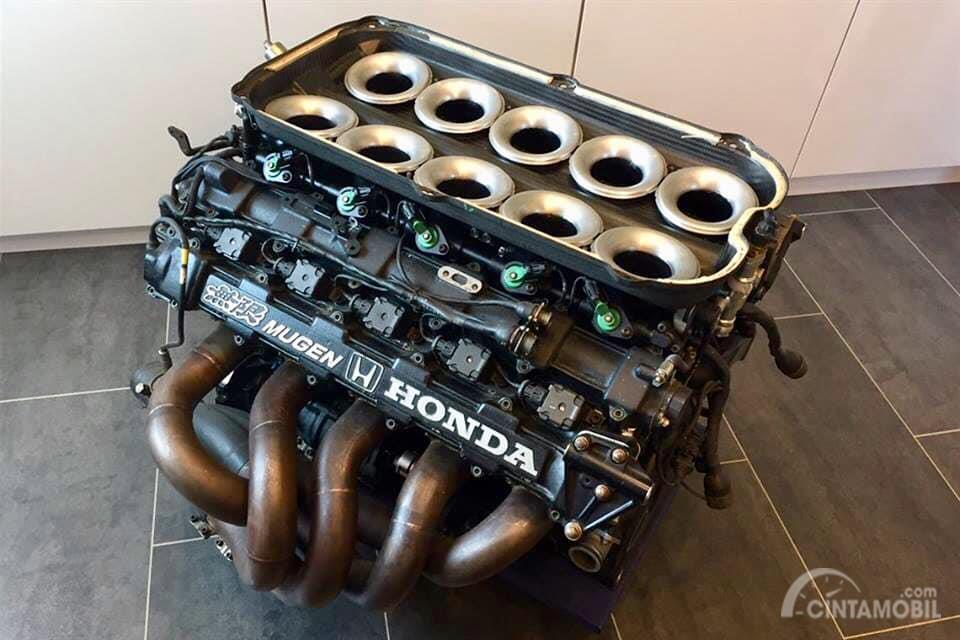
You’ll discover how F1 luxury engines squeeze out astonishing power and fuel efficiency through precision engineering, hybrid systems, and ultra‑fast electronics. These engines deliver near‑1000 horsepower from compact packages while balancing thermal limits and fuel rules to give you both blistering speed and race‑grade efficiency.
You’ll see how materials, aerodynamics, energy recovery systems, and real‑time controls work together to extract maximum performance without wasting fuel. The article will also trace how luxury manufacturers translate those breakthroughs into supercars and road‑car tech you can appreciate.
Expect clear explanations of engine architecture, hybrid strategies, electronic controls, the role of high‑end brands, and where F1 engine tech is headed next, so you can follow the engineering that drives both track dominance and everyday performance.
Engineering Marvels Behind F1 Luxury Engines
You will find cutting-edge alloys, airflow-optimized packaging, integrated hybrid systems, and razor-sharp cooling strategies working together to deliver peak power, efficiency, and durability in race conditions.
Advanced Materials and Design
You rely on exotic alloys and composite structures to keep engine mass low while handling very high stresses. Titanium and maraging steel appear in connecting rods and valve gear for high strength-to-weight ratios. Carbon-fiber and ceramic matrix composites (CMC) show up in intake plenums, heat shields, and some rotating components to cut weight and resist heat.
Precision manufacturing and additive techniques let teams set tolerances to microns. CNC machining, wire-EDM, and selective laser melting (SLM) produce complex cooling channels and lattice structures that traditional tooling cannot. You also see surface coatings — diamond-like carbon (DLC) on bearings and piston skirts, thermal barrier coatings on exhaust components — to reduce friction and extend life.
Aerodynamics Integration
You expect the engine to be an aerodynamic component, not just a power source. The engine cover, gearbox casing, and ancillaries are shaped to manage airflow to the rear wing and diffuser, improving downforce without adding drag.
Air intakes and intercooler ducts get precise routing to maintain constant pressure and temperature of the charge air. You’ll find purposely placed heat exchangers and louvers that dump hot air without disturbing the wake. Integrating the exhaust layout into underbody aerodynamics lets teams tune pressure fields that enhance ground-effect downforce.
Hybrid Powertrain Innovations
You will see two primary motor-generator units (MGU-K and MGU-H) working with a 1.6L V6 turbocharged engine to harvest and deploy electrical energy. The MGU-K captures kinetic energy under braking and can deliver up to 120 kW to the drivetrain for overtakes and acceleration bursts.
The MGU-H sits on the turbo shaft and converts exhaust heat into electrical energy, spinning the turbo or charging batteries with minimal lag. Energy stores use high-density lithium-ion cells and advanced power electronics to manage rapid charge/discharge cycles. Control software orchestrates these elements to meet track-specific strategies while obeying FIA limits on energy deployment.
Thermal Management Systems
You depend on targeted cooling to keep combustion, turbo, and electrical systems within narrow temperature windows. Multiple independent circuits carry coolant to the block, turbo housings, and oil cooler to prevent localized overheating.
Radiator size and placement balance cooling capacity with aerodynamic penalties. You’ll see variable-geometry inlet shutters and electronically controlled pumps to modulate flow based on real-time telemetry. For the hybrid components, dedicated liquid cooling and phase-change materials protect battery modules and inverters during high-load stints.
Achieving Peak Speed and Efficiency
You will find the fastest lap times come from combining reclaimed electrical power, precise forced induction, and aggressive mass reduction. Each element must work together: power when you need it, low inertia, and minimal thermal losses.
Energy Recovery Systems
You rely on two main ERS components: MGU-K (kinetic) and MGU-H (heat). The MGU-K harvests braking energy and delivers up to a regulated 120 kW boost for short bursts. It charges a high-power battery that you can deploy under acceleration to shorten lap times.
The MGU-H sits on the turbocharger shaft and converts exhaust heat into electrical energy. It controls turbo lag by either harvesting excess energy or spinning the turbo to keep boost pressure ready. Teams tune energy deployment maps race-by-race to balance battery state-of-charge, thermal limits, and lap strategy.
You must manage temperatures and charge cycles tightly. Cooling channels, inverter efficiency, and battery chemistry determine how often and how much ERS can assist without degrading components. Effective ERS integration reduces fuel flow dependence and improves both peak power and lap consistency.
Turbocharging Technology
Your powerband depends on a highly optimized turbo system that pairs with the MGU-H. Modern F1 turbos use lightweight, high-strength alloys and precision aerodynamics in compressor and turbine wheels to maximize efficiency at extreme rotational speeds—often over 100,000 rpm.
Variable geometry is not used in F1, so engineers control spool and boost through turbine housing design, wastegate calibration, and active electrical assistance from the MGU-H. That lets you get usable torque out of small-displacement, 1.6-liter V6 engines across a wide RPM range.
You monitor boost response and backpressure carefully. Intake and exhaust layouts, intercooler efficiency, and exhaust thermal management directly affect throttle response and fuel consumption. Proper turbo integration reduces lag, preserves drivability, and supports higher corner exit speeds.
Lightweight Construction
You must strip mass wherever it matters: rotating assemblies, chassis, suspension, and thermo-management systems. Engineers use carbon fiber monocoques, titanium fasteners, and bespoke aluminum-lithium alloys to minimize weight without compromising strength.
Reduce unsprung and rotational mass first because they most affect handling and acceleration. Forged magnesium wheels, hollow titanium driveshafts, and thin-wall gearbox internals lower inertia so your engine and ERS deliver performance more effectively.
Weight reduction also helps thermal efficiency. Smaller masses heat and cool faster, enabling tighter packaging of radiators and lower aerodynamic drag. Every gram saved can be reallocated to ballast for optimal weight distribution, letting you tune balance for specific circuits.
Cutting-Edge Electronics and Controls
You will find sophisticated software and real-time data systems that precisely manage engine behavior and inform every strategic decision. These systems control fuel, hybrid deployment, ignition, and give engineers actionable insight during and after each session.
Engine Management Software
Engine control units (ECUs) run bespoke firmware that you can tune for torque curves, throttle response, and fuel efficiency across RPM bands. Modern F1 ECUs integrate combustion mapping, variable intake and exhaust actuation, and and precise ignition timing adjustments to extract peak power while keeping thermal and fuel limits in check.
You configure multiple engine maps for race, qualifying, and energy-recovery modes. The software enforces FIA limits (fuel flow, fuel mass) and manages hybrid system interactions so your internal-combustion engine and MGU-K/MGU-H deliver power without breaching rules.
Development uses model-based design and hardware-in-the-loop testing. That lets you validate control logic against simulated engine dynamics before running on-track. Security, redundancy, and real-time determinism are core: fallback maps and watchdogs protect the engine if a sensor or communications path fails.
Telemetry and Data Analysis
Telemetry sends hundreds of channels per second from the car to pit lane and the factory, including RPM, turbo speed, inlet temperatures, fuel flow, torque demand, and ERS state. You monitor live traces and alarms to spot overheating, fuel-starvation risk, or inefficient energy deployment during a stint.
Teams use automated pipelines to clean and sync data, then apply statistical filters, FFTs, and machine-learning models to detect anomalies and predict component life. You receive concise dashboards and targeted alerts so engineers make setup or strategy calls within seconds.
Post-session analysis lets you correlate driver inputs, lap time delta, and component loads to optimize maps and reliability. Version control on calibration files ensures you can roll back changes and compare effect of each software update under identical conditions.
Role of Luxury Manufacturers in F1 Advancements
Luxury manufacturers bring capital, precision engineering, and brand-driven design to F1. You gain access to advanced materials, tailored powertrain elements, and high-end manufacturing techniques that directly improve speed, reliability, and efficiency.
Collaboration with Top Automotive Brands
You see direct technical transfer when luxury marques partner with teams. Brands like Mercedes‑AMG, Ferrari, and previously Honda have embedded their R&D into power unit development, drivetrain integration, and hybrid systems. That translates into specific contributions such as lightweight carbon‑composite components, precision-machined turbocharger housings, and bespoke energy recovery system (ERS) calibrations.
These collaborations also fund wind‑tunnel time, CFD cycles, and custom test rigs you wouldn’t otherwise get. Engineers from luxury firms often sit alongside team engineers, exchanging telemetry protocols and manufacturing tolerances. You benefit from reduced development cycles and components that meet both racing tolerances and high‑volume manufacturing learnings.
Bespoke Customization for Performance
Luxury firms apply bespoke approaches to optimize every subcomponent to your needs. They specify unique alloys, tighter machining tolerances, and custom coatings—such as ceramic thermal barriers or DLC (diamond‑like carbon)—to cut friction and improve thermal efficiency. That precision cuts lap time and extends component life under extreme thermal and mechanical loads.
Customization also covers calibration: bespoke engine maps, clutch bite points, and hybrid deployment strategies tailored to each circuit and driver style. You get parts and software tuned to extract maximum energy recovery and to maintain fuel efficiency within race regulations, delivering measurable performance gains on track.
Impact on Modern Supercars and Road Cars
You benefit from F1-derived engine and hybrid technologies that improve power density and fuel efficiency in supercars. Manufacturers adapt compact, high-revving engine designs and energy-recovery systems to deliver sharper throttle response and lower consumption in road-legal packages.
You see aerodynamic lessons from F1 applied to cooling and downforce management on performance cars. Active aero elements and underbody airflow tuning help maintain stability at high speeds while keeping engine temperatures within safe limits.
You get advanced materials and manufacturing methods that reduce weight and increase strength. Carbon fiber components, titanium hardware, and precision machining lower mass and improve durability without compromising safety.
Key F1-to-road transfers:
- Hybrid powertrains and ERS-like regeneration for improved efficiency.
- Active suspension concepts informing adaptive damping and ride control.
- Telemetry and simulation workflows used in vehicle development and calibration.
You encounter technology trade-offs: cost, complexity, and service requirements rise with race-derived systems. Manufacturers balance those factors by detuning or simplifying components for reliability and regulatory compliance.
You often interact with software-driven controls that originated in F1. Engine maps, torque vectoring, and driver modes give you configurable performance while preserving everyday usability.
Future Trends in F1 Engine Technology
You will see further electrification of power units, with hybrid systems becoming more powerful and better integrated into race strategy. Teams will push for higher electric boost capability while keeping strict fuel-flow and energy-recovery rules.
Expect greater use of advanced materials and additive manufacturing to cut weight and improve thermal performance. These methods let engineers create complex cooling passages and lighter components that maintain strength under extreme loads.
Data-driven calibration will grow. You will rely more on real-time telemetry, machine learning models, and digital twins to optimize engine maps during race weekends and across development cycles.
Sustainability will shape technical choices. Teams must adapt to sustainable fuels and lower-carbon processes, balancing performance with regulatory and environmental demands.
Key areas to watch:
- Higher-power ERS for extended electric deployment.
- Advanced combustion tuned for synthetic/sustainable fuels.
- Lightweight, heat-resistant alloys and 3D-printed components.
- AI-assisted control systems for adaptive power delivery.
You should expect incremental regulatory shifts that influence design directions. Political and sporting decisions will affect how quickly teams adopt bold innovations.
The next era will reward teams that integrate mechanical, electrical, and software systems seamlessly. Your understanding of those interdisciplinary links will determine how well you follow future developments.
Conclusion
You now see how F1 engines blend raw power with precise engineering to deliver peak performance and efficiency. The high-revving internal combustion unit, hybrid energy recovery systems, and lightweight materials work together to extract maximum speed while managing fuel and thermal loads.
You can appreciate that innovations in aerodynamics, telemetry, and materials science support the engine’s output. Those systems let teams push performance margins without compromising reliability during a race weekend.
Your takeaway should be practical: F1 technology focuses on measurable gains—rpm, thermal efficiency, energy recovery, and weight reduction. These gains translate into faster laptimes and smarter energy use rather than sensational claims.
You should also recognize how F1 advances trickle down to road cars. Hybrid systems, improved combustion techniques, and materials expertise often migrate into production vehicles, improving safety, efficiency, and performance for everyday driving.
Key influences at a glance:
- High-revving engine design for peak power and responsiveness.
- Hybrid ERS for energy recuperation and deployment.
- Lightweight materials and precision cooling for durability and efficiency.
You can now connect the technical elements with the strategic choices teams make. That connection explains why F1 remains a laboratory for automotive progress and a benchmark for high-performance engineering.