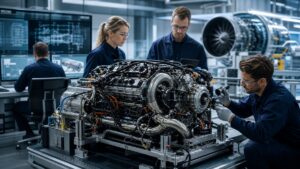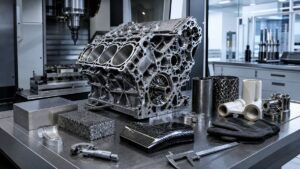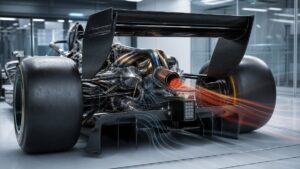
Detail Mesin F1 Mewah yang Membuat Mobil Balap Jadi Super Eksklusif: Inside the Engineering, Materials, and Performance That Define Modern Super-Exclusive Racing Cars
You step into a world where engine components double as bespoke craftsmanship—precision-machined alloys, hybrid energy systems tuned for peak performance, and materials sourced from aerospace-grade suppliers. These luxury F1 engine details—advanced composites, specialized turbocharging, and custom electronics—directly create exclusivity by delivering higher power density, lighter weight, and finely tuned reliability that few road cars can match.
Expect the post to trace how this exclusivity evolved, which cutting-edge materials and engineering choices define modern F1 power units, and how partnerships with premium brands push both performance and prestige. You will see the specific technologies and luxury elements that make some power units almost collector-grade, plus the tradeoffs and future trends shaping their next generation.
Evolution of Luxury in F1 Car Engines
You will see how engine sophistication moved from raw displacement and mechanical simplicity to precision materials, electronic controls, and regulation-driven luxury. The following subsections examine the technical milestones, the adoption of high-end components, and how rule changes reshaped what “luxury” means in power units.
Historical Overview of F1 Engine Technology
Early F1 engines relied on large-displacement, naturally aspirated units—straight-sixes and V8s—where power came from simple mechanical design and high revs. Teams prioritized peak horsepower and torque through bigger blocks, aggressive cam profiles, and mechanical fuel delivery.
In the 1970s–90s, turbocharging and then highly developed V10/V12 architectures raised power density and complexity. Engines reached revs above 18,000 rpm, demanding exotic metallurgy and precision machining.
By the 2000s, electronics and engine management systems became central. You now find integrated ECUs, knock sensors, and drive-by-wire systems replacing purely mechanical controls. These changes shifted value from raw displacement to integration, reliability, and software tuning.
Transition to High-End Materials and Components
You encounter titanium connecting rods, Inconel exhaust systems, and ceramic coatings throughout modern power units. Teams use single-crystal superalloys in turbine blades to withstand extreme temperatures and stresses.
Manufacturing moved to additive techniques and 5-axis CNC machining for tighter tolerances and weight reduction. Carbon-fiber gearbox casings and magnesium alloy housings reduce mass while increasing stiffness.
Lubrication and cooling systems also use bespoke formulations and micro-channel heat exchangers. These material choices drive higher cost per unit but deliver improved power density, thermal stability, and service intervals that match race schedules.
Influence of Regulation Changes on Luxury Features
Regulations have repeatedly redefined which technologies count as “luxury.” Fuel limits, hybrid energy rules, and standardized components have constrained some bespoke developments while elevating others.
The 2014 shift to 1.6L turbo hybrid power units forced investment in electric motor-generators, high-voltage battery systems, and complex energy recovery architectures—areas where teams differentiate via proprietary cooling, power electronics, and packaging.
Spec part mandates (ECUs, some sensors) reduced expenditures in certain areas but increased emphasis on materials, integration, and software calibration to extract performance within rules. You’ll notice teams channel luxury into thermal management, bespoke ERS tuning, and handcrafted mechanical components that remain outside standardization.
Cutting-Edge Engine Materials Used in F1
You will find focused innovations in composite structure, high-performance metals, and surface treatments that together cut weight, increase strength, and withstand extreme temperatures and stresses. Each material choice targets a specific engine function: structural integrity, heat management, or friction reduction.
Carbon Fiber Innovations
Carbon fiber dominates non-rotating engine components and structural parts where stiffness-to-weight ratio matters most. You see it in intake plenums, gearbox casings, and aerodynamic housings because it saves weight while maintaining rigidity under high G-forces.
Manufacturers use tailored fiber orientations and resin systems to tune stiffness and vibration damping for specific load paths. Prepreg layups cured in autoclaves produce consistent fiber volume and void-free laminates, improving fatigue life.
You must also consider carbon’s thermal limits; teams combine it with heat-resistant attachments or metallic inserts at fastener locations to prevent creep or localized failure. Newer hybrid laminates mix high-modulus fibers with tougher, more ductile fibers to reduce catastrophic crack propagation.
Exotic Alloys for Performance and Durability
F1 engines rely on nickel, titanium, and aluminum alloys engineered for high strength, low mass, and heat resistance. Titanium alloys appear in connecting rods and valves because they combine low density with excellent fatigue strength at high RPMs.
Nickel-based superalloys form turbine-like sections and exhaust components where temperatures exceed 700–900°C. These alloys retain creep resistance and tensile strength under continuous thermal cycling.
Aluminum-scandium and high-strength aluminum-silicon alloys serve for pistons and some block components, offering low mass and improved thermal conductivity. Precision casting or sand-printing plus CNC finishing yields the tight tolerances you need for high-revving reliability.
Advanced Coatings and Surface Treatments
You benefit most from coatings that reduce friction, resist wear, and protect against heat and corrosion. Diamond-like carbon (DLC) and molybdenum disulfide (MoS2) coatings appear on camshafts, piston skirts, and bearings to cut friction and improve transient response.
Thermal barrier coatings (ceramic-based) on exhaust liners and turbine housings lower component surface temperature and help preserve lubricant film integrity. Anti-corrosion and anti-galling treatments, such as nitriding or plasma electrolytic oxidation, harden surfaces without adding significant mass.
Teams pair surface engineering with micro-texturing and shot peening to improve oil retention and fatigue life. These treatments extend service intervals and let you push power and rpm limits with less risk of sudden failure.
Engineering Marvels: F1 Engine Design
F1 power units cram maximum power, minimal mass, and strict efficiency into a package sized to fit a tight monocoque. You get hybrid energy recovery, exotic materials, and precision machining all working together to deliver lap-winning performance.
Compact and Lightweight Engine Architecture
You benefit from a V6 turbocharged internal-combustion engine coupled to an energy-recovery system (ERS) in a package optimized for size and weight. The entire power unit—including the turbo, MGU-K, MGU-H, control electronics, and gearbox—sits within a housing that aims to be as short and narrow as possible to improve center of gravity and rear packaging.
Engine internals use thin-wall, high-strength alloys and hollow fasteners to shave grams without sacrificing durability. Cylinder spacing, crankshaft design, and ancillaries are arranged to minimize height and length while retaining structural stiffness. You’ll see custom oil and coolant routes integrated into the block to reduce separate piping and fittings.
Weight targets remain extremely tight: teams chase every 100 grams saved because it lets you add ballast for optimal balance. Packaging decisions directly affect aerodynamic rear-bodywork and suspension geometry, so compactness translates to lap-time gains.
Precision Manufacturing Techniques
Your engine components require tolerances measured in microns. Critical parts—pistons, conrods, crankshafts, and turbo shafts—undergo multi-axis CNC machining followed by cryogenic treatments and dynamic balancing to withstand 15,000+ rpm loads and thermal cycles.
Surface finishing matters: cylinder bores use diamond-like coatings or plasma spray to reduce friction and wear. Additive manufacturing (metal 3D printing) produces complex oil galleries and lightweight brackets that would be impossible with traditional casting. Non-destructive testing (ultrasonic, X-ray) and coordinate-measuring machines verify internal geometry before assembly.
Assembly happens in clean-room conditions with calibrated torque tools and laser alignment jigs. Each power unit receives a traceable inspection record so you can track life, faults, and rebuild schedules with precision.
High-Performance Cooling Systems
You rely on tightly controlled temperatures for power, reliability, and emissions compliance. Cooling starts with a compact, high-flow water jacket design around combustion chambers and turbo hot-spots to remove localized heat rapidly.
Radiators use stacked-plate or fine-tube cores with high-efficiency fans and variable coolant pumps controlled by ECU maps. Oil cooling is equally critical: separate oil coolers and heat exchangers maintain viscosity and protect bearings under transient loads. You’ll find thermostatic control valves and surge tanks integrated to prevent cavitation during rapid altitude or G-load changes.
Heat management also extends to the ERS: MGU-K and MGU-H require dedicated cooling loops and thermal insulation where they interface with the turbo and exhaust. Packaging these systems demands tight coordination with aerodynamic inlets so cooling performance doesn’t cost unnecessary drag.
Aerodynamic Integration with Chassis
You notice engine packaging directly shapes rear aerodynamic elements. The compact power unit lets designers slim rear bodywork and sculpt diffuser and beam-wing geometries for improved downforce.
You must route exhausts, cooling ducts, and intercoolers to complement airflow. Exhaust positioning influences diffuser pressure recovery and can be used to heat diffuser surfaces for better performance at certain speeds. Cooling inlets and outlets get strategically placed to feed radiators while minimizing disruption to the boundary layer.
Mounting points and gearbox casings act as stressed members of the chassis, so alignment and stiffness of the engine installation affect suspension response. Close collaboration between engine and aero teams ensures the power unit contributes to, rather than compromises, aerodynamic efficiency.
Exclusive Technologies That Define F1 Engines
You will find tightly integrated systems that prioritize peak power, instant throttle response, and energy efficiency. Each component—mechanical and electronic—works to extract maximum performance within strict regulations.
Hybrid Power Units
F1 hybrid power units combine a 1.6‑liter turbocharged V6 internal combustion engine (ICE) with electric systems that deliver additional torque and energy recovery. The ICE produces most of the peak horsepower, while the electric portion supplies short bursts of high torque and fills low‑end response gaps that a small displacement engine otherwise struggles with.
You manage power deployment through electronic control units (ECUs) that map ICE output and electric assistance to throttle position, gear selection, and fuel flow limits. Teams optimize packaging and cooling to keep thermal losses minimal; compact radiators and carefully routed plumbing preserve aerodynamic surfaces.
Power output balancing is critical. You must trade peak ICE power, hybrid deployment timing, and battery state‑of‑charge to suit circuits. Reliability constraints and fuel-flow ceilings force engineers to extract every percent of efficiency from combustion and hybrid subsystems.
Energy Recovery Systems (ERS)
ERS captures kinetic and thermal energy and converts it into electrical energy stored in high‑power battery packs. Two primary harvesters exist: MGU‑K captures braking energy from the drivetrain, and MGU‑H harvests exhaust heat from the turbocharger. Both integrate tightly with the hybrid control strategy.
MGU‑K contributes direct torque to the crankshaft and provides a regulated power boost (up to 120 kW under current rules), while MGU‑H stabilizes turbo lag and can charge batteries or spin the turbo to maintain boost. You benefit from instant torque delivery and smoother throttle response when ERS is correctly managed.
Battery cells and power electronics must tolerate extreme charge/discharge cycles and high temperatures. You will notice sophisticated cooling, bespoke cell chemistries, and a fail‑safe approach in power electronics to prevent electrical faults during races.
Turbocharging Systems
F1 turbos use single, highly efficient turbochargers with elaborate thermal management to extract maximum boost from exhaust gases. Engineers design turbines and compressors with exotic alloys and precision aerodynamics to resist high rotational speeds and temperature spikes.
You face turbo lag challenges; teams counter this by combining turbine geometry with MGU‑H control. The MGU‑H can spin the compressor to maintain boost while the ICE revs up, effectively eliminating lag on corner exits. Intercooling and short, low‑loss intake tracts preserve air density for combustion.
Material selection and balancing accuracy are paramount. Rotating assemblies run at hundreds of thousands of RPM and require microgram-level balance and coatings to handle heat and reduce wear. You see bespoke housings and integration into the exhaust layout to minimize backpressure and maximize thermal recovery.
Seamless Gear Shift Mechanisms
Seamless shift gearboxes deliver ultra‑fast gear changes with minimal torque interruption, improving acceleration and driveline stability. You experience upshifts and downshifts in milliseconds because dog‑ring and multi‑clutch architectures, along with sophisticated actuators, coordinate shifts without the usual torque gap.
Electronic control synchronizes clutch actuation, throttle blipping, and differential settings to keep torque delivery continuous. Gear ratios and shift strategies are tailored to each track; you’ll notice teams change software maps between sessions to exploit traction windows and tire behavior.
Reliability demands hardened gear teeth, precise lubrication systems, and telemetry to detect wear. You get consistent lap‑to‑lap performance because predictive maintenance schedules and component sampling prevent in‑race failures while keeping weight and inertia low.
Luxury Elements Specific to F1 Power Units
You’ll find extreme precision, driver-specific customization, and assembly methods that resemble haute couture more than mass production. Each element prioritizes performance, reliability, and exclusivity in measurable ways.
Custom-Built Engine Components
Manufacturers craft components to match a single PU’s expected lifespan and performance window. You get bespoke crankshafts, titanium connecting rods, and lightweight pistons machined to micrometer tolerances. Materials like forged titanium and billet aluminum receive bespoke heat treatments and coatings (e.g., DLC or ceramic) tailored to reduce friction and manage localized thermal loads.
Teams also tune the turbocharger’s compressor map and turbine geometry to your circuit preferences and fuel-flow strategy. Oil pumps, scavenge systems, and bespoke intercooler ducting are optimized for package constraints and transient response. Every shaft, bearing, and spline is inspected and balanced for the specific rotational and vibrational profile targeted for your car.
Personalized Electronics for Drivers
Your power unit’s electronic control unit (ECU) contains driver-specific maps and peppered calibration files. Engineers load throttle response curves, engine braking levels, and MGU-K/ H deployment strategies that accommodate your driving style and weight distribution. Telemetry channels prioritize the sensors you and the engineers monitor most — for example, custom AFR sensors, manifold pressure offsets, and bespoke knock detection thresholds.
You also receive unique steering-wheel button assignments linked to mapped engine modes. Security and encryption on the ECU prevent unauthorized access, while on-car data logging stores high-resolution packets for post-session debriefs. Calibration updates occur between sessions and sometimes between stints to tweak torque fill and energy recovery windows.
Bespoke Assembly Processes
Assembly follows written procedures tailored to each power unit serial number. You witness hand-fitment for bearing clearances, custom torque-angle sequences, and single-operator sign-offs at critical stages. Clean-room environments control particulate levels; humidity and temperature are logged to ensure consistent lubricant behavior during first runs.
Each PU passes pressure decay, spin-balance, and dyno burn-in profiles specific to its build card. Technicians use dedicated jigs and laser-alignment tools for mounting the turbo and MGU components to ensure repeatable thermal expansion paths. A stamped build sheet with measured clearances and serials accompanies the unit so you and your engineers can trace every decision back to the bench.
Collaborations with Premium Brands in F1
You’ll find two main collaboration tracks: luxury automakers supplying power units, know-how, and branding; and specialized high-end suppliers delivering bespoke engine components and materials. Both raise technical performance and exclusivity through close, often long-term engineering ties.
Engine Partnerships with Luxury Automakers
Luxury carmakers like Mercedes-AMG and Ferrari directly develop or badge Formula 1 power units, supplying complete hybrid systems, engine control software, and turbocharger technology. You get benefits such as race-proven MGU-K and MGU-H integration, advanced combustion mapping, and materials knowledge transferred back to road cars.
These partnerships often include branding and hospitality rights that boost prestige for both parties. Mercedes-AMG provided Official FIA F1® Safety and Medical Cars and limited-edition models tied to film promotions, showing how collaboration extends beyond pure engineering.
Key specifics:
- Shared R&D teams for thermal efficiency and packaging.
- Road-car derivatives: lightweight alloys, cooling layouts, and hybrid calibration.
- Commercial terms: multi-year contracts, technical support, and co-branded limited editions.
High-End Suppliers of Engine Parts
You’ll encounter specialist suppliers who craft single elements to exacting tolerances: titanium connecting rods, carbon-composite intake trumpets, and coated piston assemblies. These vendors focus on reduced mass, improved fatigue life, and surface treatments that withstand extreme thermal cycles.
Expect precise manufacturing methods such as additive manufacturing for complex coolant passages and electron-beam welded turbine housings. Suppliers also provide telemetry-grade sensors and bespoke ECU firmware modules that you won’t find in mass-market parts.
Typical supplier deliverables:
- Materials: γ-TiAl turbine alloys, Inconel exhaust components, ceramic thermal barriers.
- Processes: vacuum heat treatment, shot peening, and precision balancing.
- Performance outcomes: lower reciprocating mass, faster transient response, and longer service intervals under race loads.
Exclusive Benefits Brought by F1 Luxury Engines
You gain measurable on-track advantage, cultural prestige, and tangible tech transfer when F1-level powertrains are involved. Expect gains in lap-time performance, brand perception, and engineering know-how that can reach road cars and high-end motorsport programs.
Performance Enhancements
You get extreme power density from hybrid V6 turbo units paired with energy-recovery systems (MGU-K and MGU-H). That combination delivers instant torque fill from electric deployment and sustained peak power from the turbocharged internal combustion engine, improving acceleration out of corners and top-speed runs on straights.
Reliability and thermal management matter to lap times. F1 engines use advanced cooling channels, lightweight exotic alloys, and precision fuel mapping so you experience consistent output across race stints without thermal degradation.
You also benefit from integrated electronics: high-resolution telemetry and ECU control let engineers optimize ignition, boost, and energy deployment per lap. That precision reduces lap-time variance and lets you extract maximum grip and efficiency from the chassis-tire package.
Status Symbol and Prestige
Owning or associating with F1-grade engine technology signals exclusivity to clients, sponsors, and collectors. You project elite engineering capability and financial commitment when your brand runs bespoke power units or collaborates with top-tier engine manufacturers.
The rarity and complexity of these engines enhance perceived value. Limited production runs, specialized service teams, and bespoke calibration create scarcity that collectors and high-net-worth buyers prize.
You also gain marketing leverage. Teams and manufacturers leverage engine pedigree in storytelling, sponsorship deals, and product launches to command premium pricing and convince stakeholders of technical superiority.
Influence on Road Car Technology
You see direct trickle-down in hybrid systems, turbocharging strategies, and materials science. MGU-K/MGU-H concepts inform regenerative braking and turbo-lag mitigation in high-performance road cars, improving real-world efficiency and response.
Lightweight alloys, ceramic coatings, and compact heat exchangers developed for F1 reduce mass and improve thermal resilience when adapted for limited-production road models. That yields better power-to-weight ratios and longer component life under stress.
You also benefit from software advances. Real-time telemetry, adaptive engine maps, and predictive controls honed in racing translate into smarter engine management systems for performance road cars, delivering both drivability and measurable fuel-efficiency gains.
Challenges in Achieving Engine Exclusivity
You face high upfront spending, fragile supplier networks, and strict emissions rules when creating an F1-level exclusive engine. Each pressure point forces trade-offs between performance, cost control, and regulatory compliance.
Cost of Engineering Excellence
You must fund extensive R&D teams, precision machining, and bespoke materials to reach the performance envelope of an exclusive F1 engine. Typical budget lines include high-temp alloys, ceramic coatings, and custom turbo/energy recovery hardware; these items alone can push component costs into seven figures per development cycle.
Staff costs add up quickly. You need aerodynamicists, thermodynamicists, control-software engineers, and test drivers, plus long-duration dyno-testing that consumes thousands of development hours. Prototype iterations require expensive rapid-machining and validation runs.
You also absorb certification and homologation expenses. Meeting FIA or customer-specific reliability targets means many more test kilometers and replacement parts, which inflate total cost-per-engine and limit how many units you can offer exclusively.
Supply Chain Complexities
You rely on a narrow set of suppliers for high-spec parts like titanium conrods, bespoke turbochargers, and electronics with radiation-hardened tolerances. Single-source dependencies increase risk: a delayed billet or a failed supplier audit can halt assembly lines for weeks.
Logistics matter. You must coordinate just-in-time deliveries for costly subassemblies while keeping spare inventory for race support—balancing inventory carrying cost against the risk of stockouts. Export controls and certification paperwork for specialty alloys and electronics add administrative overhead.
Quality traceability becomes non-negotiable. You must implement serial-numbered tracking, material certificates, and inline metrology to defend warranty claims and satisfy racing homologation. That traceability raises per-unit processing time and cost but preserves exclusivity by ensuring each engine meets exacting standards.
Sustainability and Environmental Considerations
You must reconcile exclusivity with emissions targets and fuel-efficiency mandates set by regulators and sponsors. Implementing hybrid recovery systems (MGU-K and MGU-H) raises complexity: you need calibrated control strategies and additional cooling, which affect packaging and weight.
Material choices matter for lifecycle impact. Exotic alloys improve strength-to-weight ratios but complicate recycling and increase embodied carbon. You must justify those selections with lifecycle analyses or offset programs to satisfy stakeholders and championship rules that increasingly demand sustainability metrics.
Operational sustainability also affects track support. Transporting engines, spare parts, and test rigs for private development increases your carbon footprint. You must adopt logistics consolidation, low-carbon fuels for support vehicles, and supplier sustainability requirements to keep exclusivity defensible under modern environmental scrutiny.
Future Trends in F1 Luxury Engine Development
Expect tighter integration of electronics, lighter and tougher materials, and cooling systems designed for high electrical loads and concentrated power density.
Integration of Artificial Intelligence
You will see AI move from race strategy into real-time engine control. Teams already log terabytes of sensor data; AI models will predict knock, detonation, and transient torque needs faster than rule‑based maps. That lets you run closer tolerances on combustion timing and boost control while protecting reliability.
AI will also optimize hybrid deployment. Machine learning will adjust MGU-K and MGU-H contribution per corner and per lap based on tire wear, battery state, and track gradient. That reduces fuel consumption and increases lap‑to‑lap consistency.
You should expect AI to assist predictive maintenance. Anomaly detection models will flag bearing wear, injector drift, or thermal hotspots before failure. This shifts development focus from conservative safety margins to performance‑maximizing calibration.
Next-Gen Sustainable Materials
You will notice greater use of high‑temperature polymer composites and titanium aluminides in load‑bearing components. These materials cut mass without sacrificing creep resistance in exhaust and turbocharger housings.
Manufacturing will rely more on additive techniques for complex cooling passages and topology‑optimized brackets. Additive parts let you consolidate assemblies and reduce fasteners, improving stiffness and lowering NVH.
Bio‑based resins and recyclable fiber‑reinforced laminates will appear in non‑critical engine covers and ducts. They reduce lifecycle carbon without risking performance. Suppliers will certify materials to F1 durability cycles so you can trust race‑grade longevity.
Innovative Cooling and Lubrication Solutions
You’ll see cooling architectures that prioritize localized heat extraction around the turbo, ERS inverters, and battery interfaces. Micro‑channel radiators and integrated oil/water heat exchangers concentrate cooling where electrical losses and exhaust temperatures peak.
Lubrication will evolve with low‑viscosity ester oils formulated to withstand high shear while protecting gear trains under hybrid torque spikes. Oil formulations will include tailored additive packages to prevent varnish on MGU components.
Expect intelligent thermal management: variable‑flow pumps and electrically actuated valves controlled by ECU algorithms. These systems adjust coolant and oil flow per cylinder load and hybrid charge state, keeping temperatures optimal and minimizing parasitic losses.