Mesin F1 Mewah Bernilai Jutaan Dolar yang Menentukan Kemenangan Tim Elite — Inside the Multi-Million-Dollar Power Units Driving Elite Team Victories
You step into a world where a single power unit can cost millions and directly shift the balance between podiums and pit lane scrap. A luxury F1 engine combines cutting-edge hybrid systems, bespoke materials, and relentless R&D — and that combination often decides whether your team wins or watches rivals celebrate.
This article breaks down why teams invest huge sums in engines and chassis, how those investments translate to lap-time gains, and which technical features and organizational strengths turn multimillion-dollar machines into race-winning packages. Expect clear explanations of the money flows, engineering trade-offs, and the future trends that will shape the next generation of elite F1 cars.
What Makes F1 Machines a Multimillion-Dollar Investment
You pay for extreme lightness, bespoke parts, and integrated hybrid systems that must perform perfectly under race conditions. Every dollar funds custom materials, continuous development, and electronics that extract and manage energy with millisecond precision.
Exclusive Engineering and Materials
You get components made from aerospace-grade carbon fiber, titanium alloys, and heat-resistant composites that are shaped and cured in autoclaves. The monocoque alone is a bespoke carbon-fiber survival cell engineered to meet FIA crash tests; producing one requires specialized molds, vacuum-bagging, and nondestructive inspection.
Many suspension, brake, and aerodynamic elements are one-off pieces manufactured on five-axis CNC machines or additively manufactured with metal powders. That level of machining and post-process finishing raises unit cost dramatically. Spare parts inventory multiplies expense because teams rebuild parts between races rather than reuse worn items.
Research and Development Costs
You finance constant iteration: wind-tunnel models, CFD cycles, track testing, and rapid prototyping. A single aerodynamic concept can consume thousands of CFD hours and dozens of wind-tunnel runs; each run has a direct cost in facility hours and model fabrication.
Engine and drivetrain development adds licensing, dyno time, and specialist engineers. Between homologation rules and performance targets, teams spend heavily on simulation software, telemetry infrastructure, and race-legal validation. Those recurring R&D expenses show up in the per-car price because each chassis and power unit embodies continuous, team-wide investment.
Advanced Technology Integration
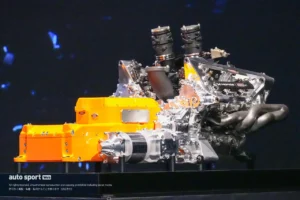
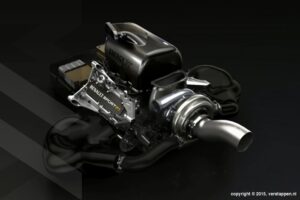
You rely on a hybrid power unit that blends a 1.6L turbo V6 with MGU-K and MGU-H energy recovery systems. These subcomponents require precision manufacturing, microsecond control software, and cooling architectures that fit tight packaging constraints.
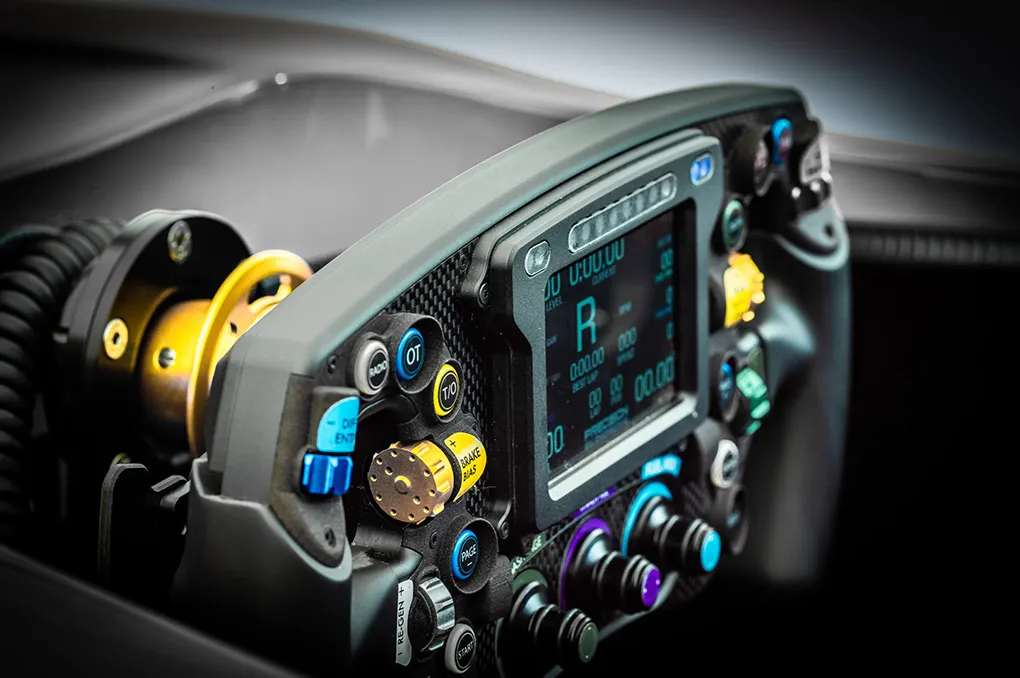
Electronics and sensors—ECUs, telemetry, real-time tire and suspension sensors—are bespoke and continuously calibrated. The steering wheel alone integrates dozens of controls and displays, each tied into the car’s control systems. Integrating all these systems so they communicate reliably at race pace demands firmware development, secure data links, and rigorous bench validation, which all contribute to the multimillion-dollar price tag.
Impact of Luxury F1 Cars on Elite Team Victories
Luxury F1 machines deliver precise speed, aerodynamic efficiency, and durable systems that convert development budgets into on-track advantage. You see gains in lap time, race strategy flexibility, and lower failure rates when teams exploit cutting-edge components and engineering.
Performance Advantages
You gain raw speed through optimized power units that produce higher peak and sustained horsepower while meeting FIA fuel-flow limits. Hybrid ERS systems tuned for quicker deployment and recovery shave tenths per lap, especially on heavy-braking circuits.
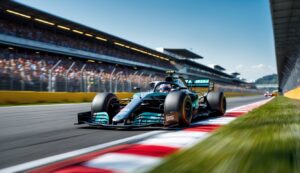
Aerodynamic surfaces—multi-element front wings, tightly packaged sidepods, and bespoke rear diffusers—improve downforce-to-drag ratio. That increases cornering speed without costing top-end on long straights. Suspension kinematics and carbon-fibre monocoque stiffness let you extract more mechanical grip from tyres over a stint.
Telemetry-driven setup changes let engineers fine-tune camber, toe, and ride height between practice runs. Those marginal gains add up: qualifying position, tyre degradation, and overtaking opportunities all improve when the package maximizes usable grip and power delivery.
Strategic Innovations
You convert technical innovation into race wins by using predictive simulations and machine-learning models to plan pit stops and tyre choices. Live-feed tire-temperature models and fuel-prediction algorithms let pit-wall strategists time stops to undercut rivals or extend a stint for track-position advantage.
Advanced brake-by-wire and energy-recovery strategies allow flexible race tactics. You can prioritize ERS harvest in clean air or deploy more aggressively during a safety car window. Data-link infrastructure—high-bandwidth, low-latency telemetry—gives you near-real-time insight, enabling split-second strategy shifts.
Investments in simulator fidelity and driver-in-loop training reduce adaptation time to new aero packages. That increases the chance your driver extracts peak performance right from qualifying, producing better grid slots and controlled race management when strategy calls for fuel saving or aggressive pace.
Reliability and Endurance
You depend on component longevity across race weekends and the season to avoid grid penalties and retirements. Luxury-grade materials, precision manufacturing tolerances, and stringent quality control lower the probability of power-unit failures, gearbox issues, and hydraulic leaks.
Preventive engineering—redundant systems, thermal-management designs, and component life monitoring—extends service intervals without performance loss. That reliability translates into more consistent finishes and fewer unplanned pit stops. When rivals suffer mechanical DNFs, your consistent finish record converts development spend into championship points.
Maintenance workflows and rapid-change pit procedures also matter. You reduce turnaround time and risk through practiced replacement protocols and modular component design, so you can sustain pace across consecutive race distances and back-to-back events.
Key Technical Features Defining F1 Car Excellence
You will find that peak performance stems from precise airflow control, energy-recovery powertrains, and carbon-structured lightness. These three areas determine lap time, tyre life, and race strategy.
Aerodynamics Optimization
You rely on aerodynamics to create downforce without excessive drag. Front and rear wings, bargeboards, and the diffuser shape channel air to press the tyres into the track, improving cornering grip. Teams tune wing angles and flap settings race-by-race to balance top-speed on straights versus cornering performance.
Ground-effect tunnels and underfloor design extract suction under the car. That generates high downforce with less drag than large wings, so you keep speed on long straights. Small details — wheel fairings, brake ducts, and vortex generators — manage turbulent flow and reduce tyre wake that can destabilize following cars.
Aerodynamic setup also affects cooling. Radiator inlets and louvers route airflow to the power unit and ERS components while minimizing disturbance to the external flow. You monitor telemetry to detect flow separation so you can adjust aero maps and avoid unpredictable handling.
Hybrid Power Units
You depend on a turbocharged 1.6‑litre V6 coupled with electrical systems for peak power and efficiency. The internal combustion engine (ICE) provides the core torque while the Motor Generator Unit‑Kinetic (MGU‑K) recovers braking energy and returns instant electric power for overtakes. The Motor Generator Unit‑Heat (MGU‑H) harvests turbo energy to reduce lag and charge the battery, improving transient response.
Energy Management is critical: you decide when to deploy stored energy for qualifying laps, overtakes, or tyre conservation. The battery, inverter, and control electronics must stay within strict temperature windows; teams design bespoke cooling loops and software strategies to protect components under race loads.
Packaging and reliability matter because every component carries parc fermé and mileage constraints. You balance maximum power output with fuel-flow limits and component longevity to avoid grid penalties that negate on-track gains.
Lightweight Chassis Design
You trust a carbon-fiber monocoque for driver protection and stiffness, keeping mass as low as regulations allow. The tub integrates crash structures and mounting points for suspension and power unit, so every gram saved elsewhere improves lap time. Teams optimize layup schedules and fiber orientation to meet stiffness targets without adding weight.
Suspension arms, uprights, and gearbox casings use titanium and high-grade aluminum alloys where appropriate. You focus on mass distribution: lowering the center of gravity and concentrating weight centrally improves rotational responsiveness through corners. Even small items—battery brackets, fasteners, and coolant plumbing—undergo material and design scrutiny.
Safety structures, such as the halo and side-impact elements, add mandatory mass that you must offset elsewhere. You validate designs with finite-element analysis and full-scale crash testing to ensure compliance without compromising competitive lightness.
The Financial Landscape of Formula 1 Teams
You face a market where team valuations, revenue streams, and technical assets directly shape on-track performance and strategic choices. Major income sources, spending limits, and proprietary technology determine which teams can convert investment into race wins.
Sponsorship and Investments
Sponsorship drives the largest portion of many teams’ operating budgets. Global brands pay tens to hundreds of millions per year for title, technical, and sleeve partnerships; smaller regional sponsors add incremental millions. You should note that premium hospitality, trackside exposure, and digital activation often justify those fees because they reach global audiences across broadcast and streaming deals.
Private investors and parent companies also inject capital. Examples include automotive group ownership or equity stakes from investment firms that fund factory expansion, wind-tunnel upgrades, and driver contracts. You will see top teams leverage diversified income—merchandise, esports, and exclusive experiences—to reduce reliance on single sponsors and stabilize cash flow.
Cost Cap Regulations
The cost cap limits on-season spending to curb gaps between teams and improve competition. For 2025, the cap sits around a fixed figure near US$170 million for many operating categories, though exact numbers and permitted exceptions vary with season-specific rules. You must understand that this cap excludes certain elements like driver salaries above a defined threshold, marketing costs, and legacy liabilities.
Teams now allocate budgets more strategically: prioritizing aerodynamics, power unit integration, and reliability. Non-compliance carries sporting penalties and financial fines, so you will see tighter internal controls, phased development programs, and outsourcing decisions designed to maximize performance within the cap.
Value of Proprietary Technology
Proprietary tech forms a major portion of a team’s intangible value. Aerodynamic maps, suspension designs, and data models for tire and fuel management can unlock lap-time gains worth millions in prize money and sponsorship leverage. You should recognize that intellectual property also offers competitive advantage in car development cycles and homologation strategies.
Teams protect this IP through internal secrecy, limited technical partnerships, and carefully drafted supplier agreements. When technology becomes transferable—via licensed parts, commercial collaborations, or staff movement—it can materially change a team’s standing. Investors value teams not just for current results but for the depth and defensibility of their technical assets.
Iconic Luxury F1 Cars That Shaped Team Success
You will read about specific cars that delivered championships and the prototypes that changed design direction. Expect concrete examples, key technical traits, and the direct impact each car had on team results.
Legendary Championship-Winning Models
You recognize the McLaren MP4/4 by its streak of 15 wins in 1988 and the dominance it gave Ayrton Senna and Alain Prost. Its Honda V6 turbocharged engine and ultra-low-profile chassis delivered extraordinary cornering and straight-line speed, translating to consistent race victories and a near-complete season sweep.
Ferrari’s 500 of the early 1950s established Alberto Ascari’s back-to-back titles through a lightweight, reliable inline-4 and exceptional mechanical balance. More recently, the Red Bull RB19 combined a refined Renault-derived power unit with superior aerodynamic downforce and suspension tuning, handing Max Verstappen multiple wins and a Constructors’ title advantage for his team.
Each model succeeded because its engineers solved a specific performance bottleneck—power delivery, aerodynamic stability, or tire management—turning a technical edge into championship points and team prestige.
Innovative Prototypes Throughout History
You should study the Lotus 25 and its monocoque chassis for changing F1 construction forever. Lotus used the monocoque to reduce weight and increase structural rigidity, which improved handling and driver safety; teams adopted the idea rapidly, reshaping car architecture.
Look at the Mercedes W11’s DAS (dual-axis steering) concept from 2020, which allowed on-the-fly toe adjustment to manage tire temperatures during long stints. While controversial and short-lived, it demonstrated how a niche mechanical innovation could yield strategic race advantages and provoke regulatory attention.
Other prototypes—ground-effect cars from the late 1970s and the turbocharged experiments of the 1980s—forced rivals to rethink aerodynamics and engine development. You benefit by noting which prototype features translated into rules or became standard practice and which remained one-off curiosities.
Role of Engineering Talent and Teamwork
You rely on precise engineering and coordinated teamwork to turn million-dollar F1 power units into race-winning packages. The next parts explain who designs and maintains the engines and how drivers and technical crews translate feedback into on-track performance.
Engineering Teams Behind the Machines
You should know that F1 engine programs combine specialists across combustion, turbocharging, hybrid systems, and controls. Each discipline has lead engineers who set targets for peak power, thermal efficiency, and reliability within the homologation and cost-cap rules.
Typical team structure:
- Power Unit Director — defines development roadmap and interfaces with chassis program.
- Combustion and Turbo Teams — optimize fuel burn, torque curve, and turbo lag.
- ERS/HV Systems Group — manages battery, MGU-K/-H strategies, and energy deployment.
- Controls & Calibration — writes ECU maps, torque blending, and safety logic.
- Test & Reliability Engineers — run dyno cycles, wear analysis, and failure investigations.
You see rapid iteration: dyno data flows to modelers who update calibration the same day. That tight loop preserves performance margin while keeping components within expected life limits.
Synergy Between Drivers and Technical Crew
You, as the driver or engineer, form the feedback loop that converts subjective feel into measurable setup changes. Drivers describe brake balance, throttle response, and mid-corner bite; engineers translate that into damper rates, differential settings, and torque maps.
Interaction highlights:
- Pre-session plan: agree on test runs, target telemetry channels, and performance windows.
- In-session telemetry: live data lets you adjust ERS deployment and engine modes lap-to-lap.
- Post-session debrief: synchronized video and data pinpoint where to alter gear ratios, cooling ducts, or fuel strategy.
You benefit when communication is precise—use consistent language and prioritized issues. Fast, specific feedback reduces time wasted on irrelevant setup changes and helps keep the power unit operating at its designed thermal and mechanical limits.
Future Trends in High-End F1 Car Development
Expect faster powertrain electrification, stricter energy-use measurement, and advanced autonomous aids that assist — not replace — driver decision-making on track.
Emerging Green Technologies
You will see hybrid systems evolve beyond energy recovery to active thermal and battery management tailored for race use. Teams are developing next-generation MGU-H/SGU variants and higher-density, fast-discharge battery packs that shave weight while sustaining peak power for qualifying laps.
Fuel chemistry will change too. Synthetic e-fuels and higher-efficiency combustion mapping aim to keep internal combustion relevant under 2026+ regulations. That reduces lifecycle CO2 without sacrificing the instantaneous torque curve you need out of low-speed corners.
Expect factory workflows to incorporate life-cycle testing and recycled composite programs. Materials science focuses on lighter carbon layups and recyclable resin systems so you get race-grade strength with a smaller environmental footprint.
Potential for Autonomous Systems
You will encounter incremental autonomy focused on safety and performance augmentation rather than driver replacement. Predictive control algorithms will assist energy deployment, brake bias, and throttle modulation during traffic and safety-car restarts.
AI-driven telemetry will offer split-second strategy changes. Machine learning models trained on millions of laps predict tire degradation and optimal pit windows, enabling your race engineer to make data-backed calls faster.
Robotic pit tools and semi-autonomous subsystems will cut service times and error rates. Regulations will tightly limit these systems, so you’ll find teams optimizing permitted assistance within strict homologation and redundancy rules.
Conclusion
You now see how a Formula 1 power unit blends cutting-edge engineering, massive budgets, and precise team integration to influence race outcomes. The engines cost millions and require constant development, but they are only one piece of a larger competitive puzzle.
You should recognize that investment in R&D, data systems, and personnel often matches or exceeds the engine’s price. Teams with deep resources convert those investments into consistent lap-time gains and race reliability.
You will notice performance stems from systems working together: engine, aerodynamics, software, and pit operations. Marginal gains across these areas compound into decisive advantages on race day.
You can weigh trade-offs between cost and competitiveness when assessing team strategies. Some teams buy success through spending, while others focus on efficiency and innovation to close gaps.
Key takeaways for your understanding:
- Engines are high-cost but integrated assets.
- Development pace and data use matter as much as raw power.
- Financial strength shapes long-term competitiveness.
You should keep watching technical progress and commercial dynamics; both will continue to reshape which teams lead the field.