Mesin F1 Mewah dengan Material Premium dan Inovasi Teknologi Mutakhir: Cutting-Edge Engineering and Luxury Performance
You step into a world where Formula 1 engineering meets haute couture: machines that balance brutal performance with handcrafted luxury and aerospace-grade materials. Expect to learn how premium alloys, carbon composites, and cutting-edge hybrid systems combine to deliver both blistering speed and refined detail that influence road‑car technology.
You’ll explore how teams use advanced simulation, AI-driven telemetry, and bespoke interiors to optimize performance and comfort without compromising safety. The article will break down the tech, materials, and design choices that turn a race car into a statement of engineering excellence and real-world innovation.
Overview of Luxury F1 Machines
Luxury F1 machines blend ultra-lightweight materials, bespoke engineering, and cutting-edge hybrid powertrains to deliver peak performance and exclusivity. You will find race cars that use titanium, carbon-titanium composites, and aerospace-grade alloys alongside bespoke cooling, telemetry, and packaging solutions tuned for optimal lap time and reliability.
Defining Premium F1 Cars
Premium F1 cars prioritize materials and engineering choices that improve power-to-weight ratio, durability, and serviceability under race conditions. You should expect extensive use of carbon fiber monocoques with localized carbon-titanium reinforcement, forged titanium uprights, and Inconel or advanced nickel alloys in exhaust and energy-recovery housings.
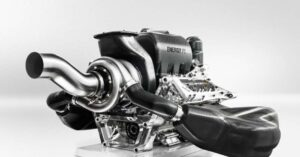
Engines pair a high-efficiency turbocharged internal combustion unit with an MGU-K and MGU-H hybrid system. Those hybrid elements increase instantaneous torque while recovering energy during braking and exhaust gas flow.
On the systems side, premium teams run bespoke electronics stacks, high-bandwidth telemetry, and driver-specific ergonomics—steering wheels, seat shaping, and pedal boxes tailored to extract maximum human performance.
Evolution of Luxury Features in F1
Luxury in F1 moved from purely aesthetic appointments to functional performance gains over decades. You will see that early “luxury” meant polished bodywork and chrome; modern luxury manifests as functional details such as molded ergonomics, integrated cooling ducts shaped in the carbon layup, and aerodynamic surfaces optimized with multi-material construction.
Materials advanced from aluminum and steel to full carbon composites and metal-matrix components, lowering weight and increasing stiffness. Suspension components evolved from steel wishbones to hollow, heat-treated titanium and carbon-structure elements to reduce unsprung mass.
Electronics and software became luxury differentiators: proprietary telemetry, predictive controls for hybrid deployment, and high-resolution sensors that let teams tune behavior to track and driver specifics.
Impact of Technology on F1 Prestige
Technology defines prestige by translating R&D into on-track advantage and brand halo effects you can measure. Teams that push boundaries in thermal management, energy-recovery algorithms, and additive-manufactured components regularly extract tenths of a second per lap.
You will notice that prestige also comes from exclusivity—custom one-off parts, limited production engine components, and factory-only calibration methods that other teams cannot replicate.
Finally, technology drives transfer value: materials and systems proven in F1 influence road-car programs, giving manufacturers a tangible return on prestige through trickle-down advantages in weight-saving techniques, hybrid efficiency, and active controls.
Cutting-Edge Technological Innovations
You will see how power delivery, energy recovery, and airflow control define modern F1 engines and chassis. These areas determine lap time, fuel strategy, and component longevity.
Hybrid Powertrain Advancements
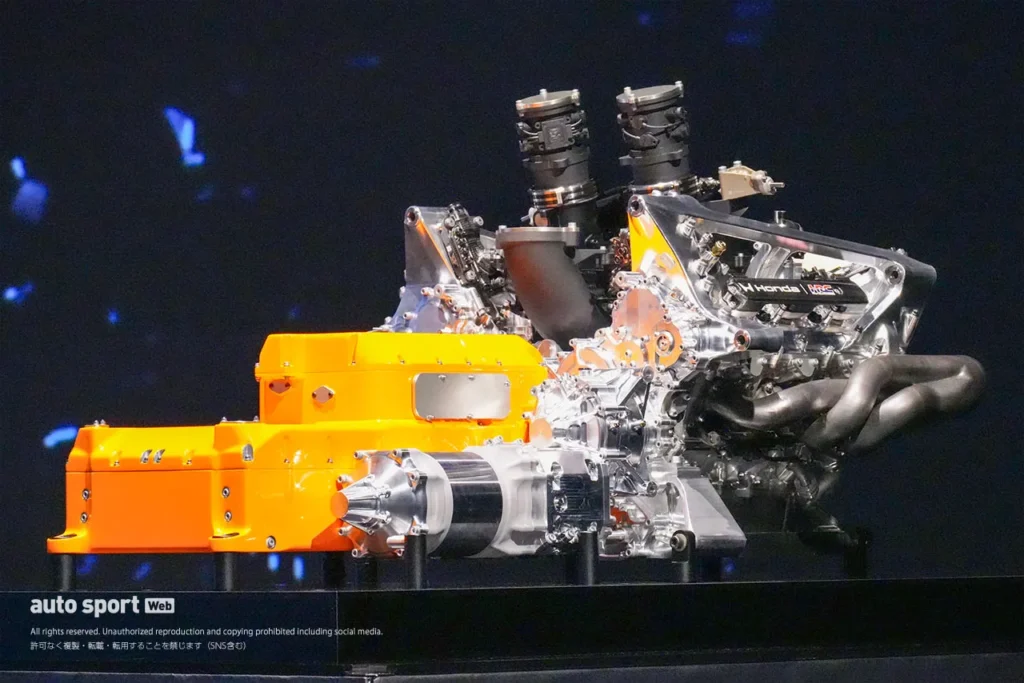
You get a compact 1.6‑liter V6 turbocharged internal combustion engine paired with sophisticated electric systems that boost power and responsiveness. Teams optimize the MGU‑K (kinetic) and MGU‑H (heat) to deliver up to ~160 kW of instantaneous electric power during deployment windows, while minimizing packaging and weight penalties.
Material choices and cooling layout matter. Titanium, Inconel, and carbon‑composite housings reduce mass and withstand thermal stress. You benefit from gearbox and e‑motor integration that shortens drivetrain paths, improving throttle response and reducing parasitic losses.
Control software ties it together. High‑frequency control algorithms manage torque blending between ICE and motors, allowing precise torque fill on corner exit and adjustable regen maps to preserve tire life and fuel consumption across a stint.
Energy Recovery and Efficiency Systems
You depend on two primary recovery systems: the MGU‑K harvesting braking energy and the MGU‑H converting turbo waste heat to electrical energy. Together they reduce net fuel burn and extend peak power windows without adding fuel load.
Efficiency comes from targeted energy storage and smart deployment. Teams use high‑power lithium‑ion packs with liquid thermal management to maintain consistent charge/discharge performance. Battery state‑of‑charge strategies prioritize lap‑by‑lap deployment for qualifying versus race scenarios.
You also get gains from thermodynamic optimization. Turbocharger mapping, intercooler efficiency, and recovered heat routing reduce pumping losses and improve specific fuel consumption. Electronic energy management systems log and adapt strategies in real time to track conditions and component wear.
Next-Generation Aerodynamics
You see aerodynamics integrated tightly with the power unit and chassis to manage cooling, downforce, and drag simultaneously. Computational fluid dynamics (CFD) and high‑speed wind‑tunnel testing produce surfaces that delay flow separation and channel cooling air without large drag penalties.
Active aerodynamic solutions remain tightly regulated, so you’ll find clever passive designs instead: multi‑element wing profiles, vortex generators, and underfloor shaping that amplify ground effect. Teams optimize radiator ducting and sidepod geometry to balance heat rejection for the hybrid systems while preserving low‑pressure zones under the car.
Small changes matter. Undertray contours, bargeboard equivalents, and mirror mounts alter wake structure and tire wake interaction. You benefit from iterative aero updates race‑to‑race that squeeze tenths of a second while keeping cooling margins for the engine and electric systems.
Premium Materials in F1 Car Construction
You’ll find materials chosen for maximum strength-to-weight, heat resistance, and crash protection. Each component balances performance gains with strict FIA safety and weight limits.
Carbon Fiber Chassis
The monocoque is almost entirely carbon fiber composite, engineered for extreme stiffness and low mass. You get a structure that resists torsion and bending, improving handling precision and allowing suspension and aerodynamic loads to be applied without frame flex.
Manufacturers lay up multiple ply orientations of prepreg carbon to tune strength and failure modes. Resin systems and autoclave curing control fiber-to-matrix bonding, so panels meet targeted impact and fatigue performance. The cockpit tub uses thicker laminates and localized Kevlar or aramid layers where puncture and abrasion resistance matter most.
Carbon’s high specific strength also lets designers add crash structures (front and rear) that absorb energy progressively. You benefit from a chassis that keeps structural weight down while protecting you in high-energy impacts.
Exotic Alloys and Composites
You’ll find titanium, Inconel, and high-grade aluminium alloys in critical load-bearing and thermal zones. Titanium appears in suspension uprights, fasteners, and some gearbox parts for its corrosion resistance and excellent strength-to-weight ratio.
High-temperature alloys like Inconel are used around the turbo, exhaust, and heat exchangers because they withstand sustained temperatures above what aluminium allows. Aluminium-lithium and forged aluminium alloys reduce weight in gearbox casings and structural brackets without sacrificing stiffness.
Hybrid composites—carbon fiber combined with ceramic or polymer matrices—appear in brake ducts, heat shields, and some aerodynamic elements to resist heat and erosion. Manufacturers also use additive manufacturing (metal 3D printing) to create complex, topology-optimised parts that save grams while meeting fatigue requirements.
Advanced Safety Materials
Safety-critical components combine energy-absorbing foams, crushable aluminium honeycombs, and aramid layers to manage crash energy. The nose cone and crash structure use specifically engineered honeycomb cores that collapse in a controlled way, dissipating kinetic energy before it reaches the monocoque.
Aramid (Kevlar) layers in the cockpit sides and underfloor protect against shrapnel and tyre debris. Fire-resistant materials such as Nomex line the cockpit and driver survival cell; these fabrics resist flame and provide thermal insulation during post-impact fires.
You benefit from iterative material testing—ballistic, impact, and thermal—so each safety element meets FIA homologation standards. Every choice prioritises predictable failure modes and occupant survival while minimising added mass.
Interior Luxury and Driver Comfort
You get a cockpit that balances race-focused ergonomics with premium materials and adjustable interfaces. Expect precise control placement, tailor-made seating, and configurable displays that prioritize your comfort and performance.
Ergonomic Cockpit Design
The cockpit centers on sightlines, reach, and tactile feedback. Controls sit within a 30–40 cm radius of your steering wheel, so you can operate paddle shifters, clutch paddles, and critical switches without removing your hands from the wheel. Primary switches use raised, textured surfaces and color-coding for blind identification at speed.
Leg, hip, and shoulder support adjust to fit your driving posture. Pedal spacing and angle are configurable to reduce fatigue and ensure repeatable heel-and-toe inputs. The steering column offers micro-adjustments for rake and reach with detents that lock in precise positions.
Noise management and climate are integrated into the cabin. Acoustic liners and targeted ventilation vents keep engine and airflow noise controlled while delivering cooling to your torso and hands. Every surface you touch uses low-friction finishes or grippy inlays to maintain control and comfort.
Personalized Controls and Displays
You interact with a layered control system that separates essential race inputs from comfort and telemetry functions. A primary HUD on the steering wheel displays lap time, gear, engine RPM, and delta time in high-contrast numerics. You can toggle secondary data like hybrid state-of-charge or tire temps via quick-action buttons.
Touch surfaces exist but prioritize haptic confirmation to prevent accidental inputs. The central display supports configurable pages that you assign through a simple profile editor—engine maps, brake bias, and radio presets become one-button selections. Lighting intensity and color temperature change automatically between day and night modes.
Connectivity links telemetry to your engineer and logs to onboard storage. You can review key parameters after a run and load preferred settings before you start. These systems use encrypted channels and give you direct control over what data shares off-board.
Custom Seat Materials
Seat shells use carbon-fiber composites for lightness and rigidity, while liners employ layered foam with zoned densities to balance support and pressure relief. Shoulder and lumbar zones use firmer inserts; the pelvis and thigh areas use softer foam to reduce hotspots on long stints.
Upholstery uses fire-retardant Alcantara, leather, or woven technical textiles chosen for breathability and grip. You can opt for perforated panels and integrated cooling channels that route conditioned air to your back and thighs. Seams place reinforcement in high-wear areas and avoid pressure points along bolsters.
Mounting hardware includes quick-release anchoring with multiple fixation points to match your harness. The seat geometry is bespoke: you select cushion height, back angle, and lateral bolster width during fitting so the seat becomes an extension of your body rather than an afterthought.
Innovative Connectivity and Data Systems
You get continuous streams of sensor data and low-latency voice and packet comms that let engineers make split-second strategy and setup decisions. The systems prioritize bandwidth allocation, secure links, and synchronized timestamps to keep data useful under race conditions.
Real-Time Telemetry
Telemetry aggregates hundreds of channels: engine RPM, MGU-K/MGU-H output, oil and coolant temps, fuel flow, brake temperatures, suspension travel, and tire carcass strain. You’ll see data sampled at 1–1000 Hz depending on the sensor, with high-priority channels routed through deterministic paths to avoid packet loss during peak radio interference.
Edge processing occurs in-car to compress and pre-process signals before uplink. This reduces bandwidth needs and preserves critical trends—like sudden oil pressure drops—that trigger automatic alarms to your pit wall and driver HUD. Time synchronization uses GPS-disciplined clocks and PTP (Precision Time Protocol) to align logs for post-session analysis and regulatory scrutineering.
Security measures include authenticated endpoints and encrypted telemetry channels to protect IP. Redundant logging ensures you retain raw data on-board if radio links fail, allowing you to reconstruct events later.
Advanced Communication Technology
Your team uses a mixed communications stack: VHF/UHF analog for voice backup, digital narrowband for voice with low latency, and high-throughput microwave or mmWave links for bulk telemetry and video. Antenna diversity and automatic frequency hopping help maintain link quality in crowded RF environments.
Latency targets sit below 100 ms for tactical messages and under 20 ms for certain closed-loop control commands. Network orchestration dynamically prioritizes packets—voice and safety telemetry get highest priority, then strategic telemetry, then low-priority telemetry and live team video. Ground stations and the pit wall run redundant routers and WAN accelerators to minimize jitter and packet reordering.
You’ll also use standardized APIs and secure VPN tunnels for remote engineers and manufacturer partners to access live data. Role-based access controls and audit logs ensure you only expose what’s necessary, protecting performance IP while enabling real-time collaboration.
Notable Luxury F1 Models and Their Features
You will find cars that shaped F1 through groundbreaking materials, aerodynamics, and power units. Expect specific examples of landmark models and the modern innovations that define today’s premium F1 machinery.
Landmark Cars in F1 History
You should study the 1967 Lotus 49 for its pioneering use of the engine as a stressed chassis member; that decision reduced weight and increased chassis stiffness. McLaren’s MP4/4 (1988) stands out for its Honda turbocharged V6 and ultra-low-profile aerodynamics, delivering 15 wins in 16 races and showing how engine-team integration can dominate a season.
Ferrari 312T (1975–76) introduced transverse gearbox layout improving weight distribution and handling; its flat-12 engine package balanced power and center-of-gravity control. Williams FW14B (1992) brought active suspension and semi-automatic gearbox to the fore, giving drivers superior traction and adaptability to track conditions.
Key features to note: structural integration of power units, gearbox packaging for balance, and early electronic systems that set the stage for today’s complex control strategies.
Unique Features of Modern F1 Cars
You will notice carbon-fiber monocoques built with pre-preg epoxy and autoclave curing, delivering extreme stiffness at minimal mass. Modern power units combine a 1.6L turbocharged V6 with two motor-generator units (MGU-K and MGU-H), recovering electrical energy and boosting low-end torque while improving fuel efficiency.
Aerodynamics now rely on multi-element front wings, complex bargeboards (where regulations allow), and finely tuned diffusers to manage downforce and wake. Safety features include deformable crash structures, Halo cockpit protection, and strict fuel-flow meters. Teams also use additive-manufactured titanium and high-strength alloys for uprights and suspension joints to resist loads without excess weight.
You can compare modern attributes quickly:
- Power unit: hybrid V6 turbo + MGU-K/H
- Materials: carbon fiber, titanium, Inconel in exhausts
- Electronics: real-time telemetry, torque-vectoring strategies
- Safety: Halo, survival cell, fuel-flow control
These characteristics show how premium materials and integrated hybrid systems drive performance, efficiency, and driver protection in today’s top F1 cars.
Influence of Luxury F1 Technology on Road Cars
Luxury F1 technologies change what you can expect from high-end road cars: lighter structures, advanced hybrid systems, and cockpit controls derived from the track now appear in production models. These transfers come from targeted material development and direct partnerships between constructors and manufacturers.
Transfer of Materials and Innovations
You benefit when carbon-fiber monocoque techniques and aerospace-grade composites from F1 enter road-car production. These materials reduce weight while increasing stiffness, improving handling and fuel efficiency in supercars and premium sedans.
Hybrid energy recovery concepts — KERS/ERS — inform road-car regenerative braking and motor-assist strategies. You see this in high-performance hybrids that use electric torque-fill for faster throttle response and lower fuel consumption.
Driver interfaces migrate too: multifunction steering controls, paddle shifters, and telemetry-inspired displays give you more control and clearer feedback. Safety elements like crash-structure design and advanced helmets also trickle down, raising protection standards in road vehicles.
Collaborations Between F1 Teams and Car Manufacturers
When F1 teams co-develop powertrains or chassis components with manufacturers, you get faster technology transfer. Examples include teams consulting on composite manufacturing, simulation workflows, and hybrid control software that manufacturers adapt for road use.
These collaborations often involve shared R&D centers and licensing agreements. You may notice production cars adopting calibration strategies, cooling solutions, or aerodynamic detailing originally validated on the track.
Manufacturers also use F1-derived test protocols and data tools to shorten development cycles. That means quicker iterations and more race-proven reliability in the luxury cars you consider buying.
Sustainability of Premium Materials and Tech
Premium materials and advanced technologies in F1 reduce weight and improve efficiency, but they also change the sport’s environmental footprint through production, supply chains, and fuel choices. You should evaluate both lifecycle emissions and operational gains when assessing sustainability.
Environmental Impact
You face trade-offs between performance and emissions. Carbon fiber composites deliver exceptional strength-to-weight ratios, lowering race-day fuel use, but their production emits significant CO2 and resists recycling. Resin systems and cure processes consume energy; switching to bio-based resins can cut fossil feedstock use but may still require high-temperature processing.
Manufacturing supply chains add more footprint. Powdered metals, exotic alloys, and bespoke electronics often come from energy-intensive smelters and fabs. Transport of parts worldwide increases scope 3 emissions. You can offset some impacts by using centralized logistics, certified low-carbon suppliers, and validated recycling streams for scrap and end-of-life components.
Future Trends in Sustainable F1 Innovation
You will see targeted material and fuel changes that keep performance high while lowering lifecycle impact. Teams are already trialing bio-based resins, recycled carbon fibers, and lower-temperature cure chemistries to reduce embodied carbon without compromising tensile strength or stiffness.
Sustainable fuels and powertrains will reshape operational emissions. Drop-in sustainable fuels compatible with existing ICEs can cut lifecycle CO2 if their feedstocks and energy inputs are low-carbon. Expect greater use of circular-economy practices: reclaiming composite waste, industrial-scale fiber reclamation, and supplier-level carbon accounting to track scope 1–3 reductions.