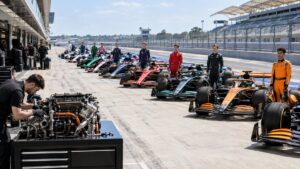
Mesin F1 Mewah dengan Teknologi Hybrid Tercanggih di Dunia Balap Modern — Cutting-Edge Powertrains, Performance, and Engineering Insights
You step into a world where luxury craftsmanship meets race‑bred hybrid power, and you’ll see how modern F1 machines balance blistering speed with energy efficiency. Expect a clear tour of the hybrid systems, design choices, and team innovations that make these cars both technologically advanced and unmistakably high‑end.
You’ll learn which hybrid technologies deliver the biggest performance gains, who’s pushing the boundaries, and how those advances reshape design, sustainability, and competition on track. Follow the forthcoming sections that unpack the engineering, manufacturers, performance impact, and future outlook of luxury F1 hybrids so you can grasp what truly sets the latest generation apart.
Overview of Luxury F1 Machines With Advanced Hybrid Technology
These cars combine high-end chassis design, race-tuned hybrid power units, and electronic control systems to deliver peak lap performance, energy recovery, and fuel efficiency. You will read about what qualifies a Formula 1 car as “luxury” in engineering terms, how hybrid subsystems work on track, and why this matters to teams, manufacturers, and you as a fan.
Definition of Luxury F1 Cars
Luxury F1 cars prioritize cutting-edge engineering, advanced materials, and bespoke power unit development that exceed standard race-spec expectations. You should look for carbon-fiber monocoques optimized for stiffness and low weight, suspension and aero packages tailored to specific circuits, and bespoke cooling or packaging solutions that come from large budgets and factory support.
A key marker of luxury in F1 is the power unit: manufacturer-built hybrid V6 turbo units with custom ERS (Energy Recovery System) integration and tailored electronic control strategies. Examples include teams with full factory programs that use in-house MGU-K and MGU-H calibration, proprietary control software, and high-margin development timelines.
You will also notice premium telemetry, simulation, and factory-backup logistics. These let teams iterate faster, extract lap-time gains, and maintain reliability under high thermal and mechanical stress.
Hybrid Technology in Modern Racing
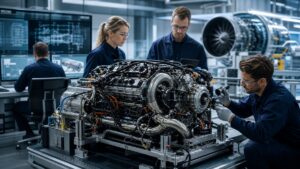
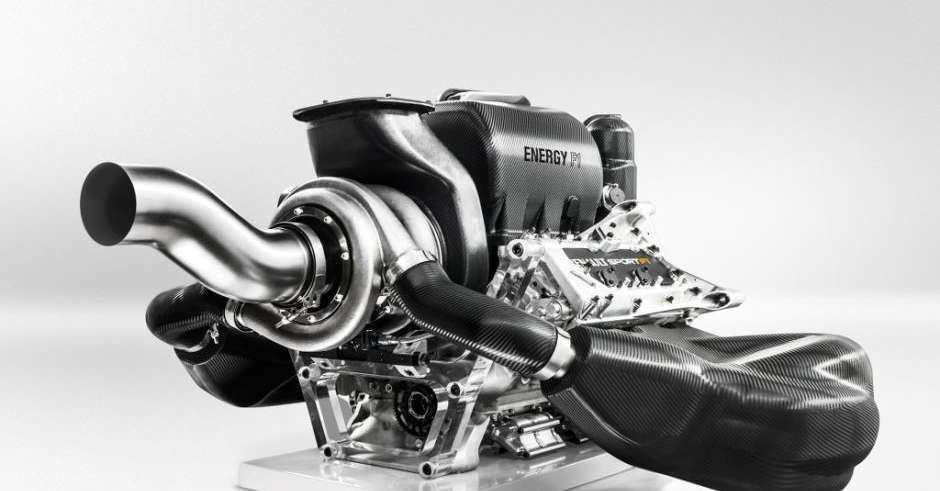
Hybrid systems in current F1 cars combine a 1.6‑litre turbocharged V6 internal combustion engine (ICE) with two primary electric elements: the MGU-K (kinetic) and MGU-H (heat). The MGU-K recovers braking energy; the MGU-H recovers turbine/heat energy from the turbocharger. You will see both supply electrical power to run the ICE, charge energy stores, or deliver extra torque to the drivetrain.
Energy stores consist of high-density lithium-ion battery packs with sophisticated power electronics and cooling. Control units manage power flows, deciding when to deploy up to the regulated 120 kW from MGU-K and when to harvest or dump energy to maintain thermal limits.
Hybrid design choices affect packaging, weight distribution, and thermal management. Teams optimize gear ratios, turbocharger sizing, and ERS maps to balance peak power, drivability out of corners, and fuel consumption under strict race fuel limits.
Significance in the Motorsport Industry
You should view F1’s hybrid tech as a platform for automotive innovation and brand positioning. Manufacturers such as Mercedes translate learnings from high-performance MGU systems and power-unit efficiency into roadgoing EV and hybrid products. That transfer increases R&D value beyond race results.
On-track, hybrid efficiency changes race strategy: fuel limits and energy deployment rules force teams to manage consumption, recover more during braking, and plan overtakes around ERS advantages. This raises technical complexity and development costs, which affects team hierarchies and competitiveness.
For you as an observer, hybrid systems make races a contest of software, thermal engineering, and energy strategy as much as mechanical grip. They also shape regulatory debates about cost caps, sustainability targets, and the future balance between spectacle and technological relevance.
Technological Innovations Shaping the Latest F1 Hybrids
You will find systems that harvest and redeploy kinetic and heat energy, a high-efficiency turbocharged internal-combustion engine paired with electric drive, and lightweight, high-power battery packs. Each element focuses on reducing lap times while meeting strict fuel and emissions targets.
Energy Recovery Systems (ERS)
ERS captures energy from two main sources: braking and exhaust heat. The Motor Generator Unit – Kinetic (MGU-K) recovers up to 2 MJ per lap from braking and converts it to electrical energy you can deploy as a power boost — typically 120 kW (about 160 hp) for short bursts.
The Motor Generator Unit – Heat (MGU-H) sits on the turbocharger and converts exhaust heat into electrical energy. It can spin the turbo to reduce lag or send electricity directly to the battery or MGU-K, improving throttle response and efficiency.
You control deployment strategies via software mapped to race conditions. Teams optimize the split between harvesting and deployment to balance lap time, tire wear, and fuel consumption. Reliability and thermal management are critical because ERS components operate at very high rotational speeds and temperatures.
Turbocharged Hybrid Power Units
Modern F1 power units combine a 1.6‑liter V6 turbocharged internal combustion engine (ICE) with hybrid units. The turbocharger raises power density while the ICE runs at leaner, more efficient conditions to meet fuel-flow and fuel-use limits.
The turbo works closely with the MGU-H to recycle exhaust energy, reducing turbo lag and allowing higher effective boost without increasing fuel usage. Peak combined output commonly exceeds 900 bhp in qualifying modes, while race modes prioritize efficiency and component longevity.
You should note packaging and cooling constraints: teams design compact cooling loops and bespoke intercoolers to manage heat from the turbo, ERS, and ICE. Component weight and center-of-gravity placement also influence chassis balance and handling.
State-of-the-Art Battery Systems
F1 battery packs use high-power, high-current lithium-ion cells optimized for short, intense discharge and rapid recharge cycles. Cell chemistry and module design prioritize power density and thermal stability over maximal energy capacity.
Batteries are integrated into a rigid, lightweight housing with active cooling channels to keep cell temperatures within a narrow band. Cooling prevents thermal runaway and preserves performance across a race stint.
Battery management systems (BMS) monitor cell voltages, temperatures, and current flow in real time. You get precise control over charge/discharge rates and state-of-charge limits, which teams tune to extract maximum usable energy per lap while ensuring component longevity and safety.
Leading Manufacturers and Teams Pioneering Hybrid Advancements
These teams lead in hybrid power-unit design, energy recovery strategy, and integration of sustainable fuels. Expect differences in battery architecture, MGU deployment, and collaboration models that directly affect lap-time consistency and reliability.
Mercedes-AMG Petronas Formula One Team
Mercedes focuses on maximizing recovered electrical power and thermal efficiency from the 1.6‑liter V6 while keeping the internal combustion engine (ICE) resilient under race loads. You’ll find Mercedes concentrating on a high-efficiency MGU-K and optimized battery cooling to deliver consistent deployment during qualifying and long stints.
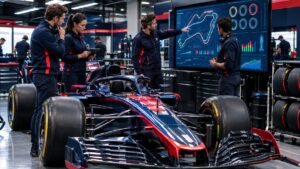
Their in-house engine development emphasizes materials and combustion mapping to reduce fuel consumption without sacrificing peak power. Mercedes also invests heavily in simulation and real‑time telemetry, letting you see precise energy-flow strategies adjusted per corner and per lap.
Red Bull Racing and Innovative Partnerships
Red Bull pairs chassis excellence with hybrid power expertise through strategic partnerships, most notably with engine suppliers who supply bespoke ERS integration. You’ll notice Red Bull’s approach blends aggressive energy deployment (‘overtake’ and ‘push’ modes) with tight packaging to preserve aerodynamic performance.
Their partnership model pushes rapid iteration: shared development targets on MGU placement, inverter efficiency, and software controls. Red Bull prioritizes on‑track performance gains and often trades some absolute thermal efficiency for superior transient power and faster energy response.
Ferrari’s Approach to Hybrid Excellence
Ferrari balances high‑revving ICE characteristics with a refined hybrid system that targets both peak output and drivability. You’ll see Ferrari focus on smoother torque fill from the MGU to aid corner exits and driver confidence, plus detailed calibration for different circuits.
Ferrari’s power-unit work includes tailored combustion strategies, compact electric motor packaging, and close coordination between engine and gearbox teams. Their development emphasizes consistent lap times and predictable energy recovery behavior, helping you rely on stable performance through varying race conditions.
Performance Impact of Hybrid Systems in Modern Racing
Hybrid systems in modern racing change how cars accelerate, use fuel, and balance weight on track. You will see sharper throttle response, measurable fuel savings, and new engineering trade-offs that affect cornering and setup.
Acceleration and Power Delivery
Hybrid systems add instant torque through electric motors that supplement the internal combustion engine (ICE) during throttle application. You get stronger out-of-corner acceleration because the Motor Generator Unit–Kinetic (MGU-K) delivers up to several hundred horsepower-equivalent in short bursts, filling turbo lag and flattening torque curves.
Energy deployment is programmable. Teams tune when and how much electric boost engages — for example, deployment maps for qualifying use maximum energy for single-lap pace while race maps preserve battery and deploy selectively for overtakes. You should expect more consistent throttle response across RPM bands, and improved traction control interactions because torque can be modulated much faster than via the ICE alone.
Fuel Efficiency and Sustainability
Hybrid power units let you extract more work per liter of fuel by recovering kinetic and thermal energy lost by conventional engines. You will see lap-time gains while cutting fuel consumption; that allows running lighter fuel loads or extending stints between refuels in series where refueling is allowed historically, or simply meeting strict fuel-flow and fuel-mass rules now used in F1.
Regenerative systems (MGU-K and MGU-H) convert braking and exhaust heat into usable electrical energy. This reduces net fuel burn and lowers CO2 per race distance without sacrificing peak power. Be aware that achieving those gains requires complex thermal and energy-management strategies, and the marginal sustainability benefit depends on the fuel source and lifecycle analysis of the battery and hybrid components.
Handling and Weight Distribution
Hybrid hardware adds mass and changes its placement, forcing teams to re-optimize chassis balance and suspension setup. You will notice a higher polar moment if batteries sit high or far from the centerline; teams counteract this by lowering battery placement and shifting ballast to restore agility.
The extra weight influences braking points and tire wear. Regeneration shifts braking force between friction brakes and electric units, which alters how brakes heat and how drivers modulate pedal pressure. You must account for altered weight transfer under acceleration and deceleration when setting camber, toe, and spring rates, because those changes affect tire contact patch behavior and overall lap consistency.
Design Excellence: Integrating Luxury With Cutting-Edge Technology
You will find careful material selection, aero optimization, and ergonomics working together to deliver both race-grade performance and refined comfort. Expect precision in tactile surfaces, driver-focused controls, and high-resolution digital systems tuned for clarity at speed.
Materials and Aerodynamics
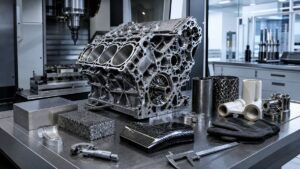
You get carbon-fiber monocoques and hybrid-specific enclosures that prioritize stiffness and lightweight structure. Manufacturers use unidirectional carbon for primary load paths and aerospace-grade titanium for suspension mounts to reduce mass while keeping crash safety high.
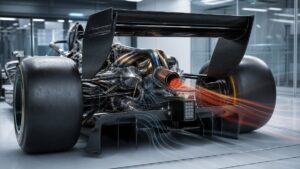
External bodywork blends active aero elements—adjustable rear wings, flaps, and venting—with smooth panels to manage cooling for the hybrid power unit. Cooling ducts target battery packs and internal combustion components separately, so you retain aerodynamic efficiency without thermal compromise.
Surface finishes balance luxury and function: exposed weave or painted carbon options pair with ceramic coatings to resist heat and wear. Every panel fastener and seal is chosen to minimize drag and NVH (noise, vibration, harshness) so the car feels both planted and premium.
Cockpit Comfort and Controls
You sit in a race-derived shell seat with adjustable lumbar, multi-point belts, and memory settings that recall driving posture for different circuits. Padding uses layered foam with phase-change or gel inserts to manage long-session comfort without adding bulk.
Controls follow a prioritized layout: steering wheel houses paddle shifters, hybrid mode toggles, and torque-bias buttons within thumb reach. Center console switches are tactile and metal-backed for positive feedback under load.
Acoustic treatments isolate drivetrain buzz while keeping essential mechanical cues audible. Climate routing ensures battery and inverter cooling is separate from cabin HVAC, so you maintain comfort without compromising thermal management for performance systems.
Digital Displays and Driver Interface
You rely on a configurable digital dash that displays hybrid-specific telemetry: instantaneous electrical power flow, recuperation rate, battery state-of-charge, and motor temperatures. Screen modes let you toggle between full-mission race data and simplified road maps.
Haptic and audible alerts prioritize safety: seat or steering-wheel vibrations signal over-temp, low SOC, or traction events so you react without glancing away. Touch inputs exist, but critical functions retain physical switches to prevent accidental activation.
Connectivity integrates live telemetry streaming and over-the-air calibration for powertrain maps. You can upload track logs, adjust hybrid strategy, and review energy usage in the pits, giving you direct control over performance and efficiency.
Environmental Benefits and Sustainable Motorsport
Hybrid power units and sustainable fuels cut fuel use, recover energy that would otherwise be lost, and create pathways for renewable energy on and off track. You will see tangible emissions reductions, new energy workflows for teams, and tech transfer to road cars.
Reduced Carbon Footprint
You lower race-day CO2 by using hybrid power units that combine a downsized internal combustion engine with an energy recovery system (ERS) and a battery. The ERS captures kinetic and thermal energy, then deploys it as electric power during acceleration, reducing total fuel consumption per lap.
Teams measure and report emissions across logistics, operations, and race running. You can track reductions through fuel use per kilometer, battery-assisted kilometers, and resets in race strategy that favor electrical deployment over pure combustion bursts.
Practical gains also come from engine efficiency: modern F1 hybrids deliver more power per liter of fuel than conventional engines. That efficiency translates into fewer tons of CO2 emitted over a season when compared with older, non-hybrid power units.
Renewable Energy Integration
You can integrate renewables at multiple points: team factories, hospitality paddocks, and fueling infrastructure. Some teams already power garages and wind-down facilities with solar arrays or purchase renewable electricity to cut upstream emissions from electricity use.
At the circuit level, sustainable fuels compatible with existing engines allow you to reduce lifecycle carbon intensity without changing fuel logistics radically. Track operators can also install local renewables and battery storage to smooth demand spikes during event weekends.
Operational changes—like electrified team transport, EV support vehicles, and on-site charging—complement these shifts. You should evaluate emissions across the supply chain, not just tailpipe output, to capture the full benefit of renewables.
Hybrid Technology’s Role in Green Racing
Hybrid systems act as both performance enhancers and emissions reducers. You gain instantaneous torque from electric motors, which lets engineers downsize combustion components and tune thermal efficiency rather than maximizing raw displacement.
The technology also accelerates transfer to road cars. Components such as regenerative braking algorithms, compact energy-dense batteries, and control electronics migrate to production vehicles, improving urban fuel economy and lowering fleet emissions.
Finally, hybrid power units support regulatory goals. When you combine hybridization with sustainable fuel mandates and carbon accounting, racing becomes a testbed for scalable, lower-carbon mobility solutions that you can apply beyond the track.
The Future of Hybrid Luxury F1 Cars
You will see advances in electric-recovery systems, sustainable fuels, and software-defined energy management. Expect regulatory direction to shape engine architectures and a growing trickle-down of racetrack hybrid tech into high-end road cars.
Upcoming Technological Trends
You will notice more powerful and compact motor-generators that harvest braking and exhaust energy with higher efficiency. Teams are developing next-gen MGU-K and MGU-H units that deliver quicker torque fill and faster energy redeployment during overtakes.
Battery chemistry will shift toward higher power-density cells and solid-state prototypes to reduce mass while allowing more aggressive power deployment. Energy-management software will become decisive; real-time optimization will balance battery state-of-charge, thermal limits, and strategic boost windows.
Aerothermal integration will matter more. You should expect cooling systems designed around hybrid components, plus tighter packaging that improves aero performance without compromising reliability. Teams will rely heavily on simulation and AI to optimize these tightly coupled systems.
Potential Regulations and Rule Changes
You must track FIA moves toward 100% sustainable fuels and stricter parc fermé controls for power-unit calibration. Regulations may cap instantaneous electrical power output, force standardized battery characteristics, or mandate homologated MGU components to control costs.
Fuel and power limits will remain central. The FIA could adjust energy allocation per lap, change recharge allowances, or introduce new penalties for improper energy deployment. You should watch rule drafts that target cost reduction: mandated durability cycles, consolidated suppliers, or upper bounds on R&D spend.
Technical directives will likely tighten cooling and packaging constraints to maintain safety and close performance gaps. Teams will need compliance plans and simulation evidence to justify novel hybrid layouts under new homologation windows.
Influence on Consumer Automotive Markets
You will see luxury road cars adopt refined motor-generator layouts and high-power energy-recovery systems first. Manufacturers will use F1-style MGU concepts to improve throttle response and short-burst acceleration in grand tourers and hypercars.
Sustainable drop-in fuels and higher-efficiency thermal management will transfer to limited-production models, helping firms meet emissions targets without sacrificing combustion character. Expect advanced battery cells and power-management software from F1 to appear in performance EV-hybrids that prioritize weight and packaging.
Supply-chain effects will follow: specialized high-power battery suppliers, compact heat-exchanger makers, and control-software firms will expand into road-car programs. You should anticipate faster technology adoption in premium segments, with gradual trickle-down to mainstream models as costs fall.
Conclusion
You can see that cutting-edge F1 hybrid engines blend extreme power with measured efficiency. They pair turbocharged combustion units with sophisticated ERS components to extract more performance per drop of fuel.
These systems drive technological transfer into road cars and motorsport engineering. Expect advances in materials, energy recovery, and software control to continue shaping both racing and commercial powertrains.
You should appreciate the balance teams pursue between outright speed and regulatory constraints. That balance forces continuous innovation in thermal efficiency, packaging, and reliability.
Key impacts you should note:
- Improved fuel efficiency without sacrificing lap times.
- Greater electrical integration for transient power and energy recovery.
- Technology trickle-down to high-performance road vehicles.
You will find that future rule changes and sustainability goals will steer further evolution. Your understanding of F1 hybrids should focus on their role as testbeds for realistic, high-performance electrification solutions.